
Working in childcare puts you in a unique position: you are responsible for some of the most vulnerable people around, and when something goes wrong, the next few minutes matter enormously. The problem is, a lot of what people “know” about first aid turns out to be outdated advice, well-meaning guesswork, or something they heard years ago that never quite added up.
These myths do not just stick around in the general community — they show up in childcare settings too. Sometimes they are things staff genuinely believe. Sometimes they were even taught incorrectly in the past. Either way, acting on the wrong information in an emergency can make things significantly worse.
Here is a look at some of the most common first aid myths in childcare — and what the evidence-based guidance from Australian authorities actually says.
Myth 1 — Put Butter or Toothpaste on a Burn
This one has been around for generations. A child touches a hot oven door or tips a cup of warm liquid, and someone reaches for the butter dish or the bathroom cabinet.
The truth: do not do it. The Australian Resuscitation Council (ARC) guidelines are clear — cool running water is the correct treatment for burns, applied for a minimum of 20 minutes. Butter, toothpaste, aloe vera, or ice will either trap heat in the skin, cause infection, or damage tissue further.
Twenty minutes feels like a long time when a child is distressed. But it is the correct response. Do not stop early. Do not apply anything else. Keep the water cool, not icy cold, and while you are doing that, call 000 for any burn to the face, hands, feet, genitals, or any burn larger than a 20-cent piece on a child.
Myth 2 — Tilt the Head Back for a Choking Child
The instinct to tilt a choking person’s head back is understandable — it is what many people picture when they think of opening an airway. But choking is not the same as an unconscious casualty needing airway management.
For a conscious child who is choking, the Australian and New Zealand Resuscitation Council’s current guidelines recommend back blows and chest thrusts (or abdominal thrusts for children over 1 year old and adults). Tilting the head back does nothing to dislodge an obstruction.
For infants under 12 months, the approach is different again — five back blows followed by five chest thrusts, checking the mouth after each cycle. Never perform blind finger sweeps in an infant’s mouth.
Knowing the difference between infant, child, and adult choking management is exactly why up-to-date, hands-on first aid training matters so much in a childcare environment.
Myth 3 — Someone Having a Seizure Needs Something Placed in Their Mouth
The idea that a person having a seizure will “swallow their tongue” is one of the most persistent myths in first aid. It is not possible to swallow your own tongue, and trying to put anything in the mouth of a person having a seizure — including your fingers — can cause injury to them and to you.
The correct approach, consistent with ARC guidelines and the guidance provided to childcare services, is to:
- Clear the area around the child of anything that could cause injury
- Time the seizure from when it begins
- Place them in the recovery position if they are unconscious and breathing after the seizure ends
- Call 000 if the seizure lasts more than 5 minutes, if it is the child’s first known seizure, or if they do not regain consciousness
Under ACECQA regulations, childcare services are required to have documented management policies for medical conditions. Having trained staff who know the correct response — not the wrong one — is part of meeting that standard.
Myth 4 — A Child Having an Asthma Attack Just Needs to Calm Down
Asthma attacks can be frightening to watch, and it is natural to want to keep a child calm. But telling them to “just breathe normally” or waiting to see if it passes is not appropriate first aid.
Asthma Australia and the National Asthma Council Australia recommend following the child’s ASCIA Action Plan for Asthma if they have one, or defaulting to the standard 4-step asthma first aid protocol:
- Sit the child upright and keep them calm
- Give 4 puffs of a reliever puffer (such as salbutamol/Ventolin), one at a time via a spacer
- Wait 4 minutes
- If there is no improvement, give 4 more puffs and call 000
It is worth noting that recent changes to Australian asthma guidelines have affected how some combination inhalers are used. Certain budesonide-formoterol inhalers can now be used as both a preventer and reliever, which is why knowing a child’s individual management plan matters, and why childcare staff should be across current, not outdated, protocols.
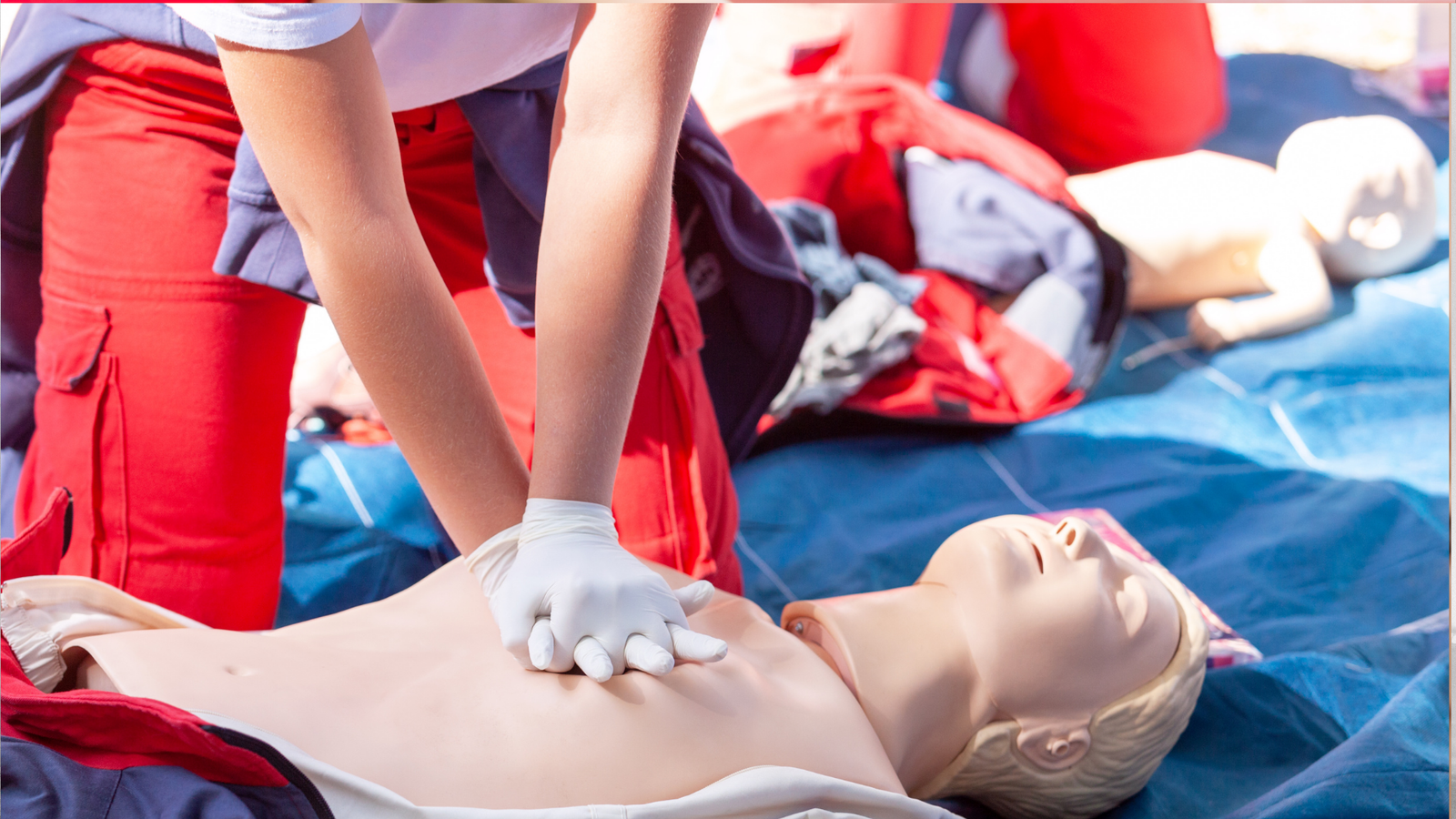
Myth 5 — CPR Is Only for Catastrophic Emergencies
Some childcare workers assume that CPR is something you only start after a catastrophic event — a drowning or a serious accident. In fact, cardiac arrest can follow any event that causes a child to become unresponsive and stop breathing normally.
The trigger for starting CPR is not a confirmed cardiac arrest. It is a person who is unresponsive and not breathing normally. If a child is unconscious, not responding, and not breathing or only gasping, start CPR immediately and call 000.
The ARC recommends performing 30 chest compressions to 2 rescue breaths for all paediatric casualties, with modified technique for infants. Not performing CPR because you are “not sure” is one of the most consequential mistakes a bystander can make. Brain damage can begin within four to six minutes of cardiac arrest.
This is part of why ACECQA requires services to maintain at least one educator who holds current first aid, anaphylaxis, and asthma management certifications at all times. It reflects a real and present risk in the childcare environment, not a bureaucratic formality.
Myth 6 — Once Trained, You Do Not Need to Refresh
First aid knowledge does not stay current on its own. Guidelines are updated, new equipment becomes standard, and skills practised only once tend to fade. The ARC and ACECQA both recognise this. Under the National Quality Framework, first aid certificates must be renewed within the timeframes set by the registered training organisation — and anaphylaxis and asthma management training must be updated every three years at minimum.
Beyond the compliance requirement, think about what happens in a real emergency. Muscle memory, confidence, and the ability to act quickly under pressure are things that come from regular practice — not from a certificate you earned four years ago. Regular training keeps responses sharp and reduces the hesitation that costs time when time matters most.
Getting the Right Training Makes the Difference
First aid knowledge that is out of date, incomplete, or built on myths is not neutral — it can actively harm outcomes. The good news is that this is entirely avoidable with the right training.
AB First Aid delivers practical, evidence-based first aid training for childcare workers across Tullamarine and greater Melbourne. Our courses are aligned with current ARC guidelines and Australian regulatory requirements, including HLTAID012 (Provide First Aid in an Education and Care Setting) for ACECQA compliance.
Whether your service needs to get staff trained for the first time or you have educators whose certificates are due for renewal, we make the process clear, practical, and actually useful — not just a day of ticking boxes.
View the course schedule and book your first aid training — or get in touch if you would like to discuss group bookings for your childcare service.
References
- Australian Resuscitation Council (ARC). (2021). Guideline 9.1.1 — Management of Foreign Body Airway Obstruction. https://resus.org.au
- Australian Resuscitation Council (ARC). (2022). Guideline 9.3 — Cardiopulmonary Resuscitation for Infants and Children. https://resus.org.au
- Australian Resuscitation Council (ARC). (2022). Guideline 9.4.8 — Burns. https://resus.org.au
- Asthma Australia. (2024). Asthma First Aid. https://asthma.org.au
- National Asthma Council Australia. (2024). Australian Asthma Handbook. https://www.asthmahandbook.org.au
- Australian Children’s Education and Care Quality Authority (ACECQA). (2024). National Quality Framework — First Aid Requirements. https://www.acecqa.gov.au
- Australasian Society of Clinical Immunology and Allergy (ASCIA). (2023). ASCIA Action Plan for Anaphylaxis. https://www.allergy.org.au