Common First Aid Myths NDIS Support Workers Should Stop Believing
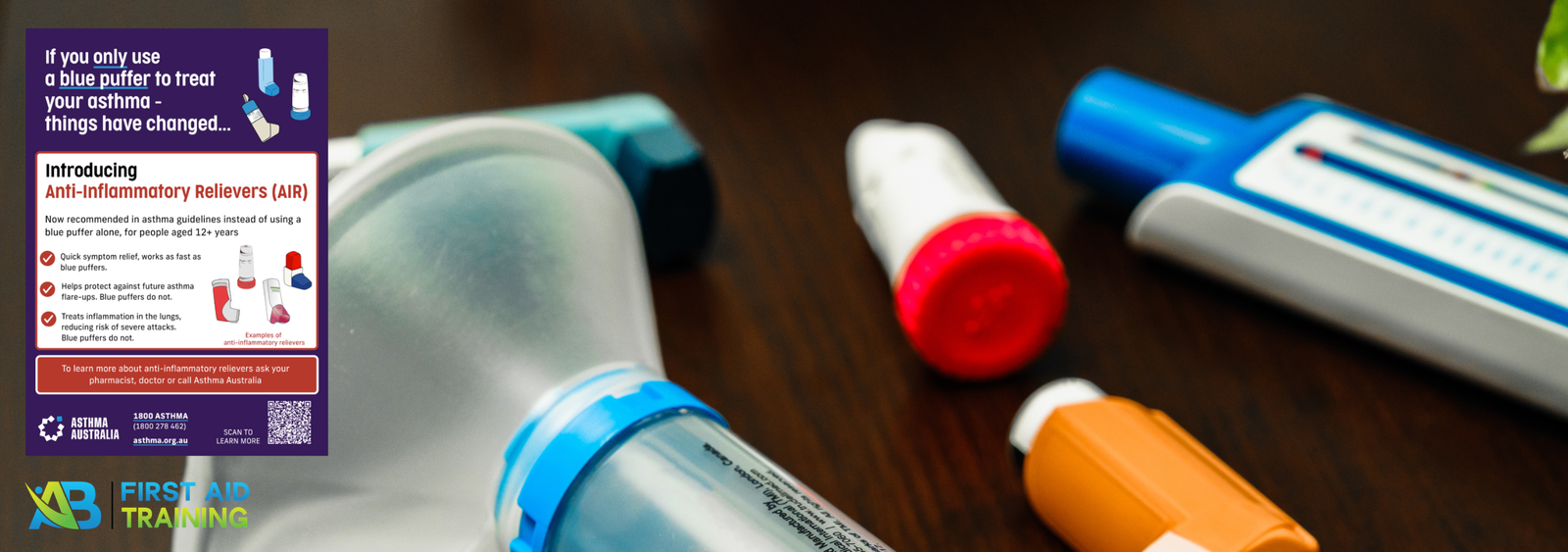
Australia’s asthma guidelines have changed. Learn what AIR therapy means and why blue puffers alone are no longer recommended for many people.
What to Do When a Student Has a Seizure: A Practical Guide for School Staff
Australia’s asthma guidelines have changed. Learn what AIR therapy means and why blue puffers alone are no longer recommended for many people.
Why First Aid Training Is Essential for Childcare Workers
Childcare workers do more than educate and care for young children — they are often the first responders when something goes wrong. Whether it’s a choking incident, an allergic reaction, or a fall in the playground, the ability to respond quickly and correctly can make a significant difference to a child’s outcome. If you work in a childcare setting in Victoria, first aid training isn’t just best practice — in most cases, it’s a legal requirement. Here’s what you need to know. What the Regulations Say The National Quality Framework (NQF), administered by ACECQA (Australian Children’s Education and Care Quality Authority), sets out clear expectations for first aid qualifications in early childhood education and care (ECEC) settings. Under the Education and Care Services National Regulations, services must ensure that at least one educator with a current approved first aid qualification is present at all times when children are in care. This includes HLTAID012 Provide First Aid in an Education and Care Setting (or the approved equivalent), an anaphylaxis management qualification, and an asthma management qualification. These are not optional extras. Meeting these requirements is part of achieving and maintaining a quality rating under the NQF, and failing to comply can put your service — and more importantly, the children in your care — at serious risk. Current requirements are available on the ACECQA website at acecqa.gov.au. What Can Go Wrong in a Childcare Setting? Children between the ages of 0 and 5 are particularly vulnerable to a range of medical emergencies. These are some of the most common incidents that childcare workers encounter. Choking is one of the most serious risks for young children. Small objects, food items, and even toys can become lodged in a child’s airway, and without immediate action, the results can be fatal. Knowing how to perform back blows and chest thrusts correctly — and staying calm enough to do so — requires practice, not just reading a manual. Allergic reactions, including anaphylaxis, are increasingly common in young children. Anaphylaxis is a severe, life-threatening reaction that requires immediate use of an adrenaline auto-injector (such as an EpiPen) and a call to 000. Without trained staff on site, a delay of even a few minutes can have devastating consequences. Asthma attacks are another frequent occurrence in childcare settings. Victoria has one of the highest rates of childhood asthma in Australia, and knowing how to manage an acute attack — including how to use a spacer and metered dose inhaler — is essential for any childcare worker. Febrile seizures, falls, fractures, and head injuries are also common in ECEC settings. In each case, a calm, trained response makes a measurable difference to the outcome for the child. First Aid Training Is Not a One-Off Many childcare workers complete their initial first aid qualification and assume that’s enough. But first aid knowledge fades over time, and techniques are updated as medical evidence evolves. ACECQA recommends that first aid qualifications are renewed every three years, with CPR updated annually. This isn’t just a bureaucratic requirement — it’s about ensuring that the people responsible for children’s safety are genuinely ready to respond when it matters. Regular refresher training also builds confidence. There’s a real difference between someone who attended a course three years ago and someone who practised CPR compressions last month. Muscle memory matters when you’re dealing with a real emergency and your hands are shaking. Creating a First Aid-Ready Environment Training your team is the foundation, but it’s not the whole picture. A first aid-ready childcare centre also: WorkSafe Victoria recommends that all workplaces — including childcare centres — conduct regular reviews of their first aid procedures and equipment. The childcare environment is particularly dynamic, with new enrolments bringing new medical needs throughout the year. The Difference Trained Staff Make When a child collapses or stops breathing, the minutes before an ambulance arrives are critical. Early CPR significantly improves survival outcomes — and while cardiac arrest is rare in young children, it does happen, particularly following drowning, choking, or severe allergic reaction. In those moments, the response of a trained childcare worker can be the difference between a child who recovers fully and one who doesn’t. That’s not an exaggeration — it’s the reality of working in a high-care environment. Beyond emergencies, trained staff also make better day-to-day decisions. They’re more likely to recognise the early signs of illness or distress, respond appropriately to minor injuries, and document incidents correctly — all of which contributes to a safer, higher-quality service overall. Book Your Team’s First Aid Training Today AB First Aid delivers practical, engaging first aid training for childcare workers and ECEC services across Melbourne and Victoria. Our courses are nationally recognised, meet ACECQA requirements, and are delivered by experienced trainers who understand the real-world demands of working with young children. We offer flexible scheduling to suit childcare rosters, including on-site group training for your whole team. Whether you need to get new staff qualified or bring your existing team’s skills up to date, we’re here to help. View our upcoming public course schedule or get in touch to discuss group bookings at AB First Aid in Tullamarine. Book your team’s training today and make sure you’re ready when it matters most. Visit abfirstaid.com.au or call us to find out more. References
The Most Common First Aid Emergencies NDIS Support Workers Face — And Why Training Matters
Disability support workers do some of the most varied, physically demanding, and emotionally complex work in the care sector. No two shifts look the same. You might spend the morning supporting someone with complex physical needs, the afternoon assisting with community access, and the evening responding to a mental health episode — all in the same day. That variety is part of what makes the work meaningful. It’s also what makes solid first aid training so important. NDIS support workers are regularly present when health emergencies occur. In many cases, you are the first — and only — person on scene before paramedics arrive. Understanding the specific risks in your role can mean the difference between a well-managed emergency and a preventable harm. Why the NDIS Sector Has Unique First Aid Risks The people NDIS workers support often live with conditions that increase the likelihood of a medical emergency. Many participants have complex health profiles, which may include epilepsy, severe allergies, diabetes, respiratory conditions, or cardiovascular disease. Some have limited ability to communicate symptoms clearly. Others may have behaviours of concern that can escalate unexpectedly. According to the NDIS Quality and Safeguards Commission, registered NDIS providers have a duty to ensure workers are trained and competent to respond to health-related incidents. Despite this, many workers report feeling underprepared when emergencies actually happen. That’s not a reflection of their commitment — it’s a reflection of how specific the risks are, and how rarely generic first aid training addresses the realities of disability support work. Seizures and Epilepsy Management Epilepsy is one of the most prevalent conditions among NDIS participants. A significant number of people with intellectual disability, acquired brain injury, or cerebral palsy experience seizures as part of their health profile. For support workers, knowing how to respond correctly is critical. Common mistakes include restraining the person during a seizure, placing something in their mouth, or leaving them unattended too quickly after the seizure ends. All of these can cause serious harm. The Australian Resuscitation Council (ARC) provides clear guidelines on seizure management. Key steps include protecting the person from injury by clearing the environment, placing them in the recovery position once convulsions stop, and monitoring their breathing. Call 000 if the seizure lasts more than five minutes, if a second seizure follows without recovery, or if the person does not regain consciousness. Many NDIS participants will have a seizure management plan as part of their support documentation. Workers should be familiar with that plan and know how to act within it. Anaphylaxis and Severe Allergic Reactions Severe allergic reactions are another high-risk emergency in the NDIS sector. Participants may have allergies to foods, medications, insect stings, or latex — and may not always be able to clearly communicate when they are reacting. According to ASCIA (the Australasian Society of Clinical Immunology and Allergy), anaphylaxis can progress within minutes and requires immediate administration of adrenaline via an auto-injector (EpiPen). Workers must know how to recognise the signs — swelling, hives, difficulty breathing, collapse — and how to use the auto-injector correctly if the participant has one prescribed. Waiting to see if symptoms improve before acting is one of the most dangerous responses to a suspected anaphylaxis. Train. Practise. Act. Choking and Airway Obstruction Choking is a significant and underappreciated risk in disability support settings. Participants with dysphagia (difficulty swallowing), cerebral palsy, Down syndrome, or acquired brain injuries may have impaired swallowing reflexes, making mealtimes a genuine risk window. Support workers who assist with meals or feeding need to understand modified texture food guidelines, recognise early signs of choking, and know how to respond effectively — including back blows, abdominal thrusts, and when to call 000. For participants who are non-ambulatory or use a wheelchair, standard choking response techniques may need to be adapted. This is exactly the kind of scenario that should be practised in training, not improvised in an emergency. Falls and Musculoskeletal Injuries Falls are among the most frequently reported incidents in NDIS settings, both for participants and workers. Safe Work Australia identifies the disability support sector as one of the highest-risk industries for musculoskeletal injuries, often related to manual handling tasks like transfers and personal care. When a participant falls, workers need to assess the situation calmly before acting. Moving someone incorrectly after a fall — particularly if a head, neck, or spinal injury is suspected — can cause serious secondary harm. First aid training covers the DRSABCD protocol and how to conduct a basic injury assessment while waiting for further assistance. Workers also need to understand their own physical limits and safe handling procedures to prevent injuring themselves in the process. Mental Health Crises and Behaviours of Concern Many NDIS participants experience mental health conditions or behaviours of concern that can escalate into crisis situations. While this isn’t strictly “first aid” in the traditional sense, de-escalation and crisis response are part of the practical safety skill set every support worker needs. Workers should understand the difference between a mental health episode and a medical emergency (some can overlap — for example, extreme anxiety can resemble a cardiac event). Knowing when to call 000, when to contact a clinical team, and how to keep both the participant and yourself safe is a core competency in this sector. Heat-Related Illness Community access activities — outings, transport, outdoor events — expose participants to heat stress risks, particularly in the Australian summer. Participants with reduced capacity to communicate may not be able to tell you they’re feeling unwell, which means workers need to be proactive about recognising the warning signs. Heat exhaustion and heat stroke can progress quickly, particularly in people with limited mobility or certain medications that affect thermoregulation. Health Victoria recommends ensuring adequate hydration, limiting sun exposure during peak heat, and knowing the symptoms of heat-related illness — dizziness, confusion, hot dry skin, rapid pulse — and how to respond. What Does This Mean for Your First Aid Training? Standard first aid training covers the fundamentals. But if
Managing a Seizure at School: What Every Staff Member Needs to Know
It happens without warning. A student is sitting in class, at the oval, or in the library — and then they’re on the ground, shaking. For many school staff, it’s one of the scariest things they’ll ever witness. But with the right knowledge, you can stay calm, act correctly, and make a real difference to that student’s safety. This guide walks you through exactly what to do when a student has a seizure, what not to do, and how Australian schools are expected to prepare for these situations. Understanding Seizures in a School Setting Seizures occur when there’s a sudden burst of abnormal electrical activity in the brain. They can affect anyone, but they’re most commonly associated with epilepsy — a neurological condition that affects around 1 in 100 Australians, according to Epilepsy Australia. Many children with epilepsy attend mainstream schools and lead full, active lives. Not all seizures look the same. A tonic-clonic (grand mal) seizure — the kind most people picture — involves muscle stiffening and rhythmic jerking. But seizures can also appear as brief staring episodes, sudden muscle jerks, or confused and automatic behaviour. School staff need to recognise all types, not just the dramatic ones. Step-by-Step: How to Manage a Tonic-Clonic Seizure The Australian Resuscitation Council (ARC) and Epilepsy Action Australia both provide clear guidance on seizure first aid. Here’s what to do: 1. Stay calm and stay with the student. Your presence matters. Keep other students back and give the person space — don’t crowd them. 2. Note the time. Check when the seizure started. This matters for what comes next. 3. Protect from injury. Clear away hard or sharp objects nearby. Do not restrain the person. Do not hold their limbs down — this can cause injury to both of you and does nothing to stop a seizure. 4. Cushion the head. Place something soft — a folded jacket, a bag — under their head if possible. Turn them gently onto their side once the jerking stops, to keep the airway clear. This is the recovery position. 5. Do not put anything in their mouth. This is one of the most persistent first aid myths. People cannot swallow their tongue during a seizure. Putting objects in their mouth risks injury to both you and the student. 6. Call 000 if: 7. Stay with them until they’re fully recovered. After a tonic-clonic seizure, the person will often be confused, tired, and disoriented. This is normal. Don’t leave them alone, and speak calmly and reassuringly until they’ve fully come around. Managing Absence Seizures and Other Types Absence seizures — where a student briefly stares into space and is unresponsive for a few seconds — can be easily mistaken for daydreaming or inattention. The student may not even know it happened. For staff, the key is to record occurrences and notify parents and the school’s first aid officer, especially if they’re happening frequently. No immediate physical intervention is needed, but documentation is important. Focal seizures (previously called partial seizures) may cause confused behaviour, automatisms (repetitive movements like lip-smacking or hand-rubbing), or brief loss of awareness. The student may not respond normally to you. Stay with them, speak calmly, and guide them away from danger if needed — but don’t restrain them. What Schools Are Required to Have in Place Under the Victorian Department of Education and Training (DET Victoria) guidelines, schools are required to have a first aid policy and to support students with health conditions including epilepsy. This includes developing individual healthcare plans for students who have diagnosed conditions that may result in a medical emergency. The DET Victoria guidelines on supporting students with medical conditions require schools to ensure relevant staff are trained and that individual management plans are in place. For students with known epilepsy, this may include specific instructions from a neurologist or paediatrician about rescue medication and when to call an ambulance. WorkSafe Victoria also requires workplaces — including schools — to maintain an adequate number of trained first aiders and a stocked first aid kit appropriate to the hazards present. Seizure management is a core competency in any recognised first aid qualification. Having a Plan Before It Happens The best time to prepare for a seizure is before one happens. Schools should: Epilepsy Action Australia recommends that schools develop an Epilepsy Management Plan in consultation with the student’s family and treating doctor. These plans are school-specific and detail triggers, warning signs, the type of seizures the student has, and any rescue medication that may be prescribed. After the Seizure: Supporting the Student Once the student has recovered, they’ll likely need to rest. Some students feel embarrassed or distressed about having a seizure in front of their peers. How staff handle the aftermath matters as much as the first aid itself. Speak privately, use a calm tone, and avoid drawing unnecessary attention. Notify parents or carers, document the incident in the school’s first aid record, and follow up with the school’s student wellbeing team if needed. Classmates may also have questions or concerns. A calm, matter-of-fact response from the teacher — without sensationalising the event — helps normalise the situation and reduces stigma for the student involved. Make Sure Your Staff Are Ready Knowing what to do in those first few minutes can be the difference between a well-managed emergency and one that causes additional harm. First aid training gives school staff the confidence to act correctly, stay calm, and support a student until professional help arrives. AB First Aid runs practical, nationally recognised first aid courses from Tullamarine, designed for school staff and education workers across Melbourne. Courses cover seizure management, CPR, anaphylaxis response, and more — delivered in a clear, practical format that actually sticks. If your school’s first aid certificates are coming up for renewal — or you want to get the whole staff trained — view the course schedule and enrol at AB First Aid. We’ll make sure your team is ready. References
When Anaphylaxis Strikes at Childcare: What the First Five Minutes Really Look Like
It’s a Tuesday morning at a busy long day care centre in Melbourne’s northern suburbs. Twenty-two children are settled into morning snack time. A room leader notices that Liam, aged four, is scratching at his face and his eyes are swollen. Within sixty seconds, he’s struggling to breathe. This is anaphylaxis. And what happens in the next five minutes will determine everything. What Is Anaphylaxis — And Why Is Childcare High-Risk? Anaphylaxis is a severe, life-threatening allergic reaction that can affect the whole body. It can be triggered by foods such as peanuts, eggs, cow’s milk, wheat, tree nuts, fish, or sesame — as well as insect stings and medications — and it can escalate from mild symptoms to cardiac arrest within minutes. Childcare environments carry a particularly high risk. Children aged one to five are in the prime window for discovering previously unknown food allergies, and cross-contamination of food is notoriously hard to prevent in group settings. According to ASCIA (the Australasian Society of Clinical Immunology and Allergy), food allergies affect approximately one in ten Australian infants — making the chances of encountering a reaction in an early childhood setting very real. Under ACECQA guidelines and the Education and Care Services National Regulations, childcare services must maintain up-to-date medical management plans for every enrolled child with a known allergy or medical condition. But as any experienced educator knows, anaphylaxis can occur in a child with no prior diagnosis. Back in the Room: The First Signs Back to Liam. The room leader who noticed him — let’s call her Priya — has completed her first aid training and recognises the warning signs immediately: These are not just signs of a minor allergic reaction. The respiratory symptoms alone indicate anaphylaxis. Priya doesn’t wait to see if it gets worse. Reaching for the EpiPen: Using the ASCIA Action Plan Every child with a known allergy at the centre has an ASCIA Action Plan for Anaphylaxis stored in their file and a copy displayed in the medication area. Liam’s plan was completed by his GP after a mild reaction to cashews six months ago — but this is the first time it’s been needed. Priya directs her co-educator to call 000 immediately. She retrieves Liam’s EpiPen Jr from the medication storage, and with another staff member supporting Liam’s position — sitting him upright, never lying him flat if he’s having trouble breathing — she administers the adrenaline autoinjector to his outer mid-thigh. This is exactly what her training prepared her to do. Not in theory — in practice, using a trainer device, under pressure, with a clock running. The 000 operator stays on the line. Liam is monitored closely. Within two minutes of the EpiPen, his breathing starts to ease. What Happens After the Injection Anaphylaxis can be biphasic — meaning a second wave of symptoms can occur hours later, even after the person has seemed to recover. This is why emergency services must always be called, even when an EpiPen appears to have worked. When paramedics arrive, they take over care and transport Liam to hospital for observation. His parents, contacted immediately after the 000 call, are waiting there. Back at the centre, Priya completes a full incident report. The centre director reviews the risk management plan, the food preparation procedures, and Liam’s updated medical file. A near-miss debrief takes place with all staff before the end of the day. This is not an overreaction. It is best practice. What This Scenario Teaches Us Every part of this response — from recognition to administration to aftercare — was shaped by training. Priya knew what to look for. She knew how to use the ASCIA Action Plan. She had physically practised using an autoinjector. She stayed calm enough to act. Without that training, the response could have looked very different: a delay in calling 000, uncertainty about when to use the EpiPen, or Liam being laid flat — which can worsen shock in anaphylaxis. The Australian Resuscitation Council (ARC) and ASCIA both emphasise that early recognition and prompt adrenaline administration are the critical factors in anaphylaxis outcomes. Every minute matters. Regulatory Requirements for Childcare Under the Education and Care Services National Regulations (Regulations 90–96), childcare services must have a policy covering the management of medical conditions including anaphylaxis. They must also ensure that: WorkSafe Victoria and the Department of Education Victoria also require that first aid training is current and appropriate to the risks in the environment. ACECQA makes it clear that anaphylaxis training is not optional — it’s a core requirement for any approved childcare service. Is Your Team Ready? The children in your care deserve staff who can act — not just staff who know the theory. First aid training for childcare workers isn’t a box-ticking exercise. It’s the reason a child like Liam goes home safely. AB First Aid offers nationally recognised first aid training suited to early childhood education and care settings, including hands-on anaphylaxis response practice. Our courses run regularly from our Tullamarine training centre, and we also offer group bookings for services who want to train their whole team together. Book your first aid training today, or view the full course schedule to find a session that works for your team. References
The Most Common First Aid Emergencies on Electrical Worksites — And How to Respond
Working in the electrical trade means dealing with real physical risks every single day. Falls from height, electrical contact, heat exposure, lacerations — these aren’t hypotheticals. They’re regular hazards that put workers in harm’s way, and when something goes wrong on an electrical worksite, the person standing closest to the injured worker is usually a tradie, not a paramedic. That’s why first aid knowledge isn’t a nice-to-have for electricians and construction workers. It’s a genuine workplace safety requirement — and more than that, it’s the difference between a colleague recovering or not. Here’s a rundown of the most common first aid emergencies on electrical worksites in Australia, and what to do when they happen. Electrical Contact and Shock Electrical contact is one of the most serious risks in the trade. According to Safe Work Australia, electricity is responsible for a significant number of serious injuries and fatalities in the construction sector each year — including electrocution, severe burns, and cardiac arrest. When a person has been exposed to an electrical current, the first priority is safety. Never touch the injured person while they are still in contact with the current. Turn off the power at the source if it is safe to do so. Only approach the person once you are certain the electrical supply has been isolated. Once safe: Even if someone appears fine after electrical contact, they must be assessed by medical personnel. Internal injuries, cardiac irregularities, and delayed symptoms can occur hours after the incident. Falls from Height Falls are the leading cause of serious injury and death in the construction industry across Australia. WorkSafe Victoria reports that falls from ladders, scaffolding, roofs, and elevated platforms are among the most common mechanisms of serious injury for workers in the trades. When responding to a fall: Any fall from over one metre should be treated as potentially serious, even if the person insists they’re fine. Lacerations and Penetrating Wounds Sharp tools, metal conduit, exposed wires, and construction materials mean lacerations and puncture wounds are common on electrical worksites. Deep cuts, especially those involving hands or forearms, can cause significant blood loss quickly. To manage a serious cut: Under the Safe Work Australia First Aid in the Workplace Code of Practice (2024), high-risk worksites must have adequate first aid supplies and trained personnel on site. For electrical and construction work, this means accessible kits and workers who know how to use them. Heat Stress and Heat Exhaustion Electrical workers frequently work outdoors, in roof spaces, sub-floor areas, or poorly ventilated commercial buildings — all environments where heat exposure is a real concern, particularly during Victorian summers. Heat exhaustion can progress to heatstroke rapidly if not managed. Signs include heavy sweating, weakness, pale or cold skin, nausea, headache, and dizziness. To respond: WorkSafe Victoria advises that heat management plans — including adequate rest breaks, hydration, and monitoring — are part of employer duty of care obligations on worksites. Eye Injuries Arc flash, flying debris, metal shavings, and chemical splashes are all common causes of eye injuries in electrical and construction settings. Eye injuries can cause permanent damage if not treated promptly. If something enters the eye: The right personal protective equipment (PPE) prevents most eye injuries — but when PPE fails or isn’t worn, fast first aid response matters. Musculoskeletal Injuries Sprains, strains, and back injuries from manual handling, awkward positions, and repetitive tasks are among the most common injuries affecting electrical workers. While they’re rarely life-threatening, they can end careers if not managed properly. For a musculoskeletal injury: WorkSafe Victoria requires that all workplace injuries — including soft-tissue injuries — are recorded and that injured workers receive appropriate medical attention. What This Means for Worksite First Aid Training Knowing what to do in the first few minutes of an emergency is not something most people pick up by chance. It takes training, practice, and regular refreshing of skills. Under the Safe Work Australia First Aid in the Workplace Code of Practice, employers in high-risk industries are required to ensure there are sufficient first aid officers on site, that first aid kits are stocked and accessible, and that workers know how to respond in an emergency. Whether you’re the site supervisor, the apprentice, or somewhere in between — having current first aid skills makes your worksite safer for everyone. Ready to Get Your Ticket Up to Date? AB First Aid runs practical, industry-relevant first aid and CPR training in Tullamarine, with courses suited to construction workers, electricians, and trade professionals. Book your first aid training or view the full course schedule and enrol directly online. Courses run regularly — so there’s no reason to put it off. References
First Aid Compliance for Childcare Services: What Australian Providers Need to Know
Running a childcare service in Australia means navigating a fair amount of regulation, and first aid is one area where the rules are clear — and the stakes are high. If you’re responsible for an early childhood service, understanding exactly what’s required under national law isn’t just good practice; it’s your legal obligation. Here’s a plain-language breakdown of what your service needs to know. The Legal Framework: National Law and National Regulations First aid requirements for education and care services are set out in the Education and Care Services National Law and the Education and Care Services National Regulations 2011. These are administered in Victoria by the Department of Education and regulated nationally through the Australian Children’s Education and Care Quality Authority (ACECQA). These laws apply to long day care, family day care, outside school hours care (OSHC), and preschool and kindergarten services. They’re not optional — failure to comply can result in formal notices, compliance directions, and in serious cases, suspension of service approval. How Many Trained Staff Do You Need? This is where services often have questions. Under Regulation 136, at least one educator with a current approved first aid qualification must be on the premises at all times the service is operating. For family day care, the educator providing care must hold the qualification themselves. ACECQA specifies that approved first aid qualifications must include: Services must also ensure that at least one person present holds current anaphylaxis management training and current emergency asthma management training. These are separate certifications and must be kept current independently of the main first aid qualification. What Does “Current” Actually Mean? This catches services out more often than you’d expect. A staff member might have completed first aid training several years ago — but if it’s outside the renewal period, it doesn’t count for compliance purposes. Some services try to get by with the absolute minimum — one trained person on-site at any given time. Practically speaking, this creates coverage gaps whenever that person is away, on a break, or unexpectedly absent. Having multiple trained staff across your team is both safer and smarter from an operational standpoint. First Aid Kits and Equipment Compliance isn’t just about people — your service also needs to maintain appropriate first aid equipment. Regulation 89 requires education and care services to have a first aid kit that is: ACECQA doesn’t prescribe the exact contents, but the Australian Resuscitation Council (ARC) and Safe Work Australia guidelines are the standard benchmarks. Your kit should include wound care supplies, gloves, a CPR face shield or mask, and a current first aid manual, among other items. If children enrolled at your service have a diagnosed allergy, you’ll also need to ensure prescribed adrenaline auto-injectors — such as EpiPen, Jext, or the newer Neffy nasal spray — are on-site and accessible, along with a current ASCIA Action Plan for each affected child. Policies, Procedures, and the National Quality Framework Compliance isn’t just about ticking off certificates. Under the National Quality Framework, services are expected to have clear, written first aid policies and procedures that are regularly reviewed and available to families. Quality Area 2 of the National Quality Standard — Children’s Health and Safety — requires services to demonstrate that health and safety practices are built into everyday operations, not just filed away in a folder. In practical terms, this means: Your service’s Authorised Supervisor is responsible for ensuring compliance is maintained, documentation is current, and staff training records are up to date and accessible. Common Compliance Gaps in Childcare Settings Working with childcare services across Victoria, a few issues come up repeatedly: Expired CPR certificates. Because CPR must be renewed annually — not every three years like the full first aid qualification — it’s easy for it to slip. Staff renew their first aid cert on time but don’t realise their CPR component has lapsed in the meantime. Relying on a single trained staff member. If your only first aid-qualified educator calls in sick or goes on leave, you may not be legally compliant to operate. Building training across your team removes this single point of failure. Out-of-date anaphylaxis action plans. ASCIA Action Plans should be reviewed annually and whenever a child’s medical management changes. An old plan in a child’s file isn’t a current plan — and it won’t serve them in an emergency. No accessible training records. Services need to demonstrate compliance during assessment and ratings visits. If you can’t produce records showing current certifications for your team, it creates problems — even if the training was completed. What to Do If You’re Not Sure Where Your Service Stands Start with an honest audit of your team’s training records. Check when each person’s first aid certificate, CPR, anaphylaxis training, and asthma training were completed — and when each one expires. Map that against your rosters to see where gaps might exist. If you’ve found gaps, they’re straightforward to fix. AB First Aid offers HLTAID012 Provide First Aid in an Education and Care Setting, designed specifically for childcare professionals. Our trainers understand the early childhood context — the scenarios, the language, the regulatory backdrop — and we work with services across the Tullamarine area and surrounds. Group bookings are available for services wanting to upskill multiple staff at once, and we can often accommodate training at your premises to reduce disruption to your operations. Stay Compliant, Stay Confident First aid compliance in childcare isn’t a once-and-done exercise. Certificates expire, staff change, and regulations are updated. The responsibility sits with you as an approved provider to keep your team trained, your records current, and your policies up to date. If your service is due for a refresh — or if you’re not confident your training records would hold up under scrutiny — now is a good time to act. Book your first aid training with AB First Aid in Tullamarine, or view the full course schedule and enrol online. Our team is ready to help your service stay safe,
Seizure First Aid for NDIS Support Workers: A Practical Step-by-Step Guide
If you work as a disability support worker, chances are you’ve already thought about what you’d do in a medical emergency. And while there are many situations you might prepare for, seizures tend to sit near the top of the list — not because they’re necessarily dangerous every time, but because they can be frightening to witness and the wrong response can cause real harm. Many NDIS participants live with conditions associated with a higher likelihood of seizures, including epilepsy, acquired brain injury, cerebral palsy, and Down syndrome. Knowing how to respond calmly and correctly isn’t optional for support workers — it’s an essential part of the role. Here’s what you need to know. Understanding Seizures in a Disability Support Context A seizure occurs when there’s a sudden burst of electrical activity in the brain that temporarily disrupts normal function. Seizures can look quite different depending on the type. The most recognisable is the tonic-clonic seizure (formerly called a grand mal), which involves loss of consciousness, muscle rigidity, and rhythmic jerking movements. But seizures can also present as a brief blank stare (absence seizure), unusual repetitive movements, or sudden muscle limpness. For NDIS participants with a known seizure disorder, your organisation may already have guidance in the participant’s Health Support Plan about what their typical seizures look like, how long they usually last, and what response is expected. Familiarising yourself with this information before an event occurs is one of the most practical steps you can take as a support worker. Step-by-Step: Responding to a Tonic-Clonic Seizure The following steps are consistent with guidelines from the Australian Resuscitation Council (ARC) and Epilepsy Action Australia. 1. Stay calm and stay present.Your response sets the tone. Keep others nearby calm and clear the immediate area of bystanders where possible. 2. Note the time.Start timing the seizure from the moment it begins. This is critical information for emergency services and medical staff. 3. Protect the person from injury.Gently guide them away from hard surfaces or hazards if you can do so safely. Place something soft under their head — a folded jacket, a bag, anything available. Move furniture and sharp objects out of the way. 4. Do not restrain them.Do not hold down their arms or legs. Restraining someone during a seizure does not stop it and can cause injury to both of you. 5. Do not put anything in their mouth.The idea that a person can swallow their tongue during a seizure is a myth. Placing objects in the mouth can cause broken teeth, jaw injuries, or injury to your own fingers. 6. Stay with them throughout.Do not leave the person alone. Monitor them closely for the duration of the seizure. 7. After the seizure — recovery position.Once the seizure ends and if the person remains unconscious or is drowsy, gently roll them onto their side into the recovery position. This keeps their airway clear and supports breathing. Stay with them and offer calm reassurance as they regain awareness. It’s normal for a person to feel confused, exhausted, or distressed after a seizure — this phase is called the postictal state and can last from several minutes to an hour. 8. Document what you observed.Note the time, duration, type of movements, any loss of consciousness, and how the person was afterwards. This information is valuable for their treating health professionals and required for incident reporting under NDIS obligations. When to Call 000 Seizures do not always require emergency services, but there are situations where calling 000 immediately is the right call. These include: If a participant has a known seizure disorder and their Health Support Plan specifies a different response protocol, follow that plan — but always err on the side of caution. When in doubt, call 000. What Not to Do In the heat of the moment, well-meaning instincts can sometimes lead to responses that make things worse. To be clear: These actions are not only ineffective — they can cause injury and distress. NDIS Practice Standards and Your Obligations The NDIS Practice Standards, overseen by the NDIS Quality and Safeguards Commission, require registered providers to support the health and wellbeing of participants, including having appropriate processes in place for managing health emergencies. For participants with a history of seizures, this typically means having a current Health Support Plan that outlines the participant’s seizure type, usual duration, and agreed staff response. It also means ensuring that staff working with that participant have the training and knowledge to implement the plan. Support workers should know where to find a participant’s Health Support Plan and understand what it says before a seizure occurs — not during one. If you haven’t been provided this documentation for the participants you support, raise it with your supervisor. It’s not an unreasonable ask; it’s a practical safety requirement. Providers are also required to report certain incidents, including seizures that result in injury or require emergency medical treatment, through the NDIS Commission’s incident management system. Why First Aid Training Matters for Support Workers Reading a guide like this one is useful preparation, but there is no substitute for hands-on first aid training. Knowing the steps and actually practising them are two different things. In a real emergency, training helps you act with confidence rather than freeze up or make decisions that could cause harm. The nationally recognised qualification HLTAID011 (Provide First Aid) covers emergency responses including seizure management, anaphylaxis, CPR, and a range of other scenarios that are directly relevant to NDIS support work. For support workers, having a current first aid certificate is not just good practice — it is increasingly expected by NDIS providers as a baseline requirement. Training also supports compliance with NDIS Practice Standards and gives your employer, your participants, and their families greater confidence in the quality of care being provided. Book Your First Aid Training with AB First Aid AB First Aid provides practical, hands-on first aid training in Tullamarine for NDIS support workers, disability providers, and care teams. Courses are