
First Aid Compliance in Childcare: What ACECQA and Victorian Regulations Actually Require
If you work in an early childhood education and care (ECEC) service, you’ve probably heard that you need a first aid certificate. But what does that actually mean in practice? Which qualification? How many staff need it? And what happens if someone’s certificate lapses?
These are fair questions, and the answers matter. Non-compliance with first aid requirements isn’t just a paperwork issue — it’s a quality and safety failure that can put children at risk and expose your service to regulatory action. Here’s a clear breakdown of what Australian and Victorian regulations actually require.
The Legislative Framework
First aid requirements for childcare services in Australia are set out under the Education and Care Services National Law Act 2010 and the Education and Care Services National Regulations 2011. These apply to approved childcare services across all states and territories, including Victoria.
In Victoria, the Department of Education (DET Victoria) is the regulatory authority for most education and care services, while ACECQA (the Australian Children’s Education and Care Quality Authority) oversees the National Quality Framework and maintains national standards.
Three key regulations govern first aid compliance in childcare services:
- Regulation 136 — First aid qualifications
- Regulation 137 — Anaphylaxis management training
- Regulation 145 — Asthma management training
Regulation 136: First Aid Qualifications
Under Regulation 136, at least one educator or staff member with a current approved first aid qualification must be present at all times when children are being educated and cared for.
The key phrase is “present at all times.” This means the qualified person must be physically on site and available — not rostered on elsewhere in the building or off on a break without adequate cover. If your sole first aid-qualified staff member steps out, you’re technically non-compliant for the duration of their absence.
ACECQA maintains an approved list of first aid qualifications that meet Regulation 136. The specific qualification designed for childcare and education settings is:
- HLTAID012 — Provide First Aid in an Education and Care Setting
This unit covers paediatric-specific content and is the recommended qualification for ECEC staff. HLTAID011 (Provide First Aid) is also on the approved list, but HLTAID012 is more relevant to a childcare environment given its focus on infants and young children.
Importantly, the CPR component (HLTAID009) within any first aid qualification must be refreshed every 12 months, while the full qualification is valid for 3 years. Services should track both renewal dates separately — many services focus on the three-year renewal and forget about the annual CPR refresh, which creates a compliance gap.
Regulation 137: Anaphylaxis Management Training
Regulation 137 requires that at least one educator or staff member with current approved anaphylaxis management training is present whenever children are in care.
Anaphylaxis is a life-threatening allergic reaction that can escalate within minutes. With the rate of food allergies in Australian children continuing to rise, this training is essential — not just for regulatory compliance, but because staff genuinely need to know how to recognise anaphylaxis, administer an adrenaline auto-injector correctly, and when to call 000.
Approved training options include:
- HLTAID014 — Provide Advanced First Aid (covers anaphylaxis management)
- ASCIA online anaphylaxis e-training (free, available at etraining.allergy.org.au)
The ASCIA e-training is widely accepted and is a practical, low-cost way to meet Regulation 137. It must be renewed every 2 years. Check ACECQA’s approved training list to confirm current accepted options.
Regulation 145: Asthma Management Training
Regulation 145 requires at least one educator or staff member with current approved emergency asthma management training present when children are being cared for.
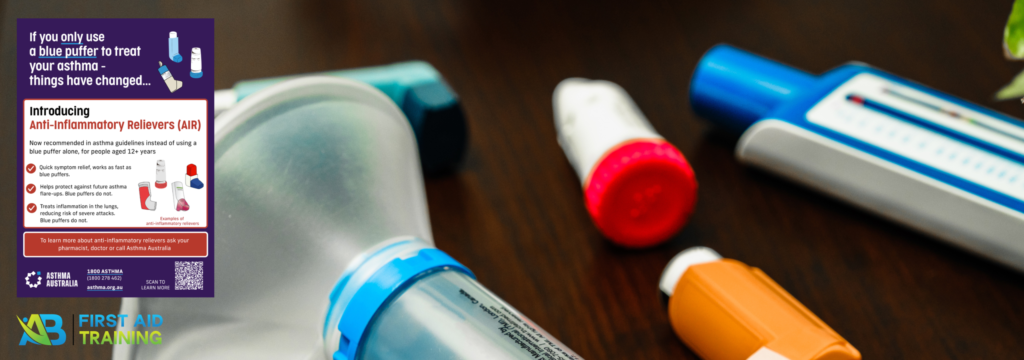
Asthma is one of the most common chronic conditions in Australian children, with approximately 1 in 9 children affected. Knowing how to recognise worsening asthma, administer a reliever correctly (including via a spacer), and when escalation is needed can make a real difference in an acute episode.
Approved training must meet standards set by Asthma Australia. Their recognised training programs are widely accepted under Regulation 145, and many first aid providers include emergency asthma management as part of a broader childcare-specific first aid course.
How Many Staff Need to Be Trained?
Regulations 136, 137, and 145 each require at least one qualified person to be present. In practice, however, relying on a single person for each requirement creates significant operational risk. If that person calls in sick, takes leave, or resigns, you face an immediate compliance issue.
Best practice is to ensure a meaningful proportion of your regular staff hold current qualifications — not just the minimum number required. Services with multiple trained educators are better placed to maintain continuous compliance across different shifts, rooms, and rostering situations.
What Does Non-Compliance Look Like?
During an assessment and rating visit, regulatory officers from DET Victoria will check that your service meets all first aid requirements. This includes verifying that qualifications are current (within renewal dates), that the correct qualifications are held (not expired or outdated units), and that at least one qualified person is present during care hours.
Non-compliance with Regulations 136, 137, or 145 is assessed under Quality Area 2 of the National Quality Standard (Children’s Health and Safety) and can affect your service’s quality rating. In serious or repeated cases, it can trigger compliance notices or conditions on your service approval.
Keeping Track of Renewals
Qualification management doesn’t need to be complicated. A simple spreadsheet tracking each staff member’s first aid certificate expiry, CPR refresh date, anaphylaxis training expiry, and asthma training expiry is enough for most services. Building renewal reminders into your HR or rostering system helps ensure nothing slips through.
Group training sessions are a practical option for keeping your whole team current at once, and they’re often more cost-effective than individual bookings spread across the year.
Book First Aid Training for Your Childcare Team
AB First Aid offers practical, engaging first aid training specifically suited to childcare and early education environments. Our courses cover HLTAID012 (Provide First Aid in an Education and Care Setting), CPR, anaphylaxis management, and emergency asthma management — giving your team the skills and confidence to respond when it counts.
We’re based in Tullamarine and offer group and public course options to suit your service’s needs. Book your first aid training with AB First Aid and keep your team compliant and capable.
References
- Australian Children’s Education and Care Quality Authority (ACECQA). First aid requirements. www.acecqa.gov.au
- Education and Care Services National Regulations 2011 (Cth), Regulations 136, 137, 145. Federal Register of Legislation.
- Department of Education Victoria. Education and care services: regulatory requirements. www.education.vic.gov.au
- Australasian Society of Clinical Immunology and Allergy (ASCIA). Anaphylaxis e-training. etraining.allergy.org.au
- Asthma Australia. Asthma first aid training. www.asthmaaustralia.org.au
- Australian Institute of Health and Welfare (AIHW). (2023). Asthma in children. www.aihw.gov.au

Book A Course
Recent Blogs
- All Posts
- Compliance
- First Aid

Learn how NDIS support workers should respond to seizures and epileptic episodes — duty of care, safe positioning, documentation, and...
Victorian schools must comply with Ministerial Order 1160 on anaphylaxis management. Learn what DET requires for staff training, Action Plans,...

Australia now has a second PBS-listed adrenaline auto-injector. Here’s what childcare educators, school staff and parents need to know about...
AB First Aid Training & Compliance
First Aid Compliance in Childcare: What ACECQA and Victorian Regulations Actually Require
If you work in an early childhood education and care (ECEC) service, you’ve probably heard that you need a first aid certificate. But what does that actually mean in practice? Which qualification? How many staff need it? And what happens if someone’s certificate lapses?
These are fair questions, and the answers matter. Non-compliance with first aid requirements isn’t just a paperwork issue — it’s a quality and safety failure that can put children at risk and expose your service to regulatory action. Here’s a clear breakdown of what Australian and Victorian regulations actually require.
The Legislative Framework
First aid requirements for childcare services in Australia are set out under the Education and Care Services National Law Act 2010 and the Education and Care Services National Regulations 2011. These apply to approved childcare services across all states and territories, including Victoria.
In Victoria, the Department of Education (DET Victoria) is the regulatory authority for most education and care services, while ACECQA (the Australian Children’s Education and Care Quality Authority) oversees the National Quality Framework and maintains national standards.
Three key regulations govern first aid compliance in childcare services:
- Regulation 136 — First aid qualifications
- Regulation 137 — Anaphylaxis management training
- Regulation 145 — Asthma management training
Regulation 136: First Aid Qualifications
Under Regulation 136, at least one educator or staff member with a current approved first aid qualification must be present at all times when children are being educated and cared for.
The key phrase is “present at all times.” This means the qualified person must be physically on site and available — not rostered on elsewhere in the building or off on a break without adequate cover. If your sole first aid-qualified staff member steps out, you’re technically non-compliant for the duration of their absence.
ACECQA maintains an approved list of first aid qualifications that meet Regulation 136. The specific qualification designed for childcare and education settings is:
- HLTAID012 — Provide First Aid in an Education and Care Setting
This unit covers paediatric-specific content and is the recommended qualification for ECEC staff. HLTAID011 (Provide First Aid) is also on the approved list, but HLTAID012 is more relevant to a childcare environment given its focus on infants and young children.
Importantly, the CPR component (HLTAID009) within any first aid qualification must be refreshed every 12 months, while the full qualification is valid for 3 years. Services should track both renewal dates separately — many services focus on the three-year renewal and forget about the annual CPR refresh, which creates a compliance gap.
Regulation 137: Anaphylaxis Management Training
Regulation 137 requires that at least one educator or staff member with current approved anaphylaxis management training is present whenever children are in care.
Anaphylaxis is a life-threatening allergic reaction that can escalate within minutes. With the rate of food allergies in Australian children continuing to rise, this training is essential — not just for regulatory compliance, but because staff genuinely need to know how to recognise anaphylaxis, administer an adrenaline auto-injector correctly, and when to call 000.
Approved training options include:
- HLTAID014 — Provide Advanced First Aid (covers anaphylaxis management)
- ASCIA online anaphylaxis e-training (free, available at etraining.allergy.org.au)
The ASCIA e-training is widely accepted and is a practical, low-cost way to meet Regulation 137. It must be renewed every 2 years. Check ACECQA’s approved training list to confirm current accepted options.
Regulation 145: Asthma Management Training
Regulation 145 requires at least one educator or staff member with current approved emergency asthma management training present when children are being cared for.
Asthma is one of the most common chronic conditions in Australian children, with approximately 1 in 9 children affected. Knowing how to recognise worsening asthma, administer a reliever correctly (including via a spacer), and when escalation is needed can make a real difference in an acute episode.
Approved training must meet standards set by Asthma Australia. Their recognised training programs are widely accepted under Regulation 145, and many first aid providers include emergency asthma management as part of a broader childcare-specific first aid course.
How Many Staff Need to Be Trained?
Regulations 136, 137, and 145 each require at least one qualified person to be present. In practice, however, relying on a single person for each requirement creates significant operational risk. If that person calls in sick, takes leave, or resigns, you face an immediate compliance issue.
Best practice is to ensure a meaningful proportion of your regular staff hold current qualifications — not just the minimum number required. Services with multiple trained educators are better placed to maintain continuous compliance across different shifts, rooms, and rostering situations.
What Does Non-Compliance Look Like?
During an assessment and rating visit, regulatory officers from DET Victoria will check that your service meets all first aid requirements. This includes verifying that qualifications are current (within renewal dates), that the correct qualifications are held (not expired or outdated units), and that at least one qualified person is present during care hours.
Non-compliance with Regulations 136, 137, or 145 is assessed under Quality Area 2 of the National Quality Standard (Children’s Health and Safety) and can affect your service’s quality rating. In serious or repeated cases, it can trigger compliance notices or conditions on your service approval.
Keeping Track of Renewals
Qualification management doesn’t need to be complicated. A simple spreadsheet tracking each staff member’s first aid certificate expiry, CPR refresh date, anaphylaxis training expiry, and asthma training expiry is enough for most services. Building renewal reminders into your HR or rostering system helps ensure nothing slips through.
Group training sessions are a practical option for keeping your whole team current at once, and they’re often more cost-effective than individual bookings spread across the year.
Book First Aid Training for Your Childcare Team
AB First Aid offers practical, engaging first aid training specifically suited to childcare and early education environments. Our courses cover HLTAID012 (Provide First Aid in an Education and Care Setting), CPR, anaphylaxis management, and emergency asthma management — giving your team the skills and confidence to respond when it counts.
We’re based in Tullamarine and offer group and public course options to suit your service’s needs. Book your first aid training with AB First Aid and keep your team compliant and capable.
References
- Australian Children’s Education and Care Quality Authority (ACECQA). First aid requirements. www.acecqa.gov.au
- Education and Care Services National Regulations 2011 (Cth), Regulations 136, 137, 145. Federal Register of Legislation.
- Department of Education Victoria. Education and care services: regulatory requirements. www.education.vic.gov.au
- Australasian Society of Clinical Immunology and Allergy (ASCIA). Anaphylaxis e-training. etraining.allergy.org.au
- Asthma Australia. Asthma first aid training. www.asthmaaustralia.org.au
- Australian Institute of Health and Welfare (AIHW). (2023). Asthma in children. www.aihw.gov.au
Have You Read These Articals Yet?
- All Posts
- Compliance
- First Aid
Learn how NDIS support workers should respond to seizures and epileptic episodes — duty of care, safe positioning, documentation, and...
Victorian schools must comply with Ministerial Order 1160 on anaphylaxis management. Learn what DET requires for staff training, Action Plans,...

Australia now has a second PBS-listed adrenaline auto-injector. Here’s what childcare educators, school staff and parents need to know about...