

The Most Common First Aid Emergencies in Victorian Schools — And How Staff Should Respond
Schools are busy, unpredictable environments. On any given day, a student might have an asthma attack during PE, a child with a known allergy could go into anaphylaxis at lunch, or someone might take a hard knock to the head on the oval. For school staff — whether teachers, learning support aides, office staff, or administrators — knowing how to respond to these situations is not just good practice. In Victoria, it is a legal requirement.
This post covers the first aid emergencies that occur most frequently in Victorian schools, what staff should know about each one, and why proper training is the only way to be genuinely prepared when something goes wrong.
Anaphylaxis
Anaphylaxis is a severe, life-threatening allergic reaction that can develop within minutes of exposure to a trigger. In schools, the most common triggers include foods such as peanuts, tree nuts, milk, eggs, and sesame, as well as insect stings and some medications.
The Department of Education and Training (DET) Victoria requires all government schools to have an anaphylaxis management policy. ASCIA (the Australasian Society of Clinical Immunology and Allergy) provides the national guidelines for anaphylaxis management in schools. Each enrolled student with a known anaphylaxis risk must have an individual anaphylaxis management plan on file, and staff who are likely to be in contact with those students must be trained in how to recognise and respond to anaphylaxis — including how to use an adrenaline auto-injector such as an EpiPen.
Recognising anaphylaxis early is critical. Symptoms can include hives or skin flushing, swelling of the face or throat, difficulty breathing, abdominal pain, vomiting, and collapse. The correct response is to administer the student’s prescribed adrenaline auto-injector, lay them flat (or sit them up if breathing is difficult), call Triple Zero (000), and continue monitoring until emergency services arrive.
Asthma Attacks
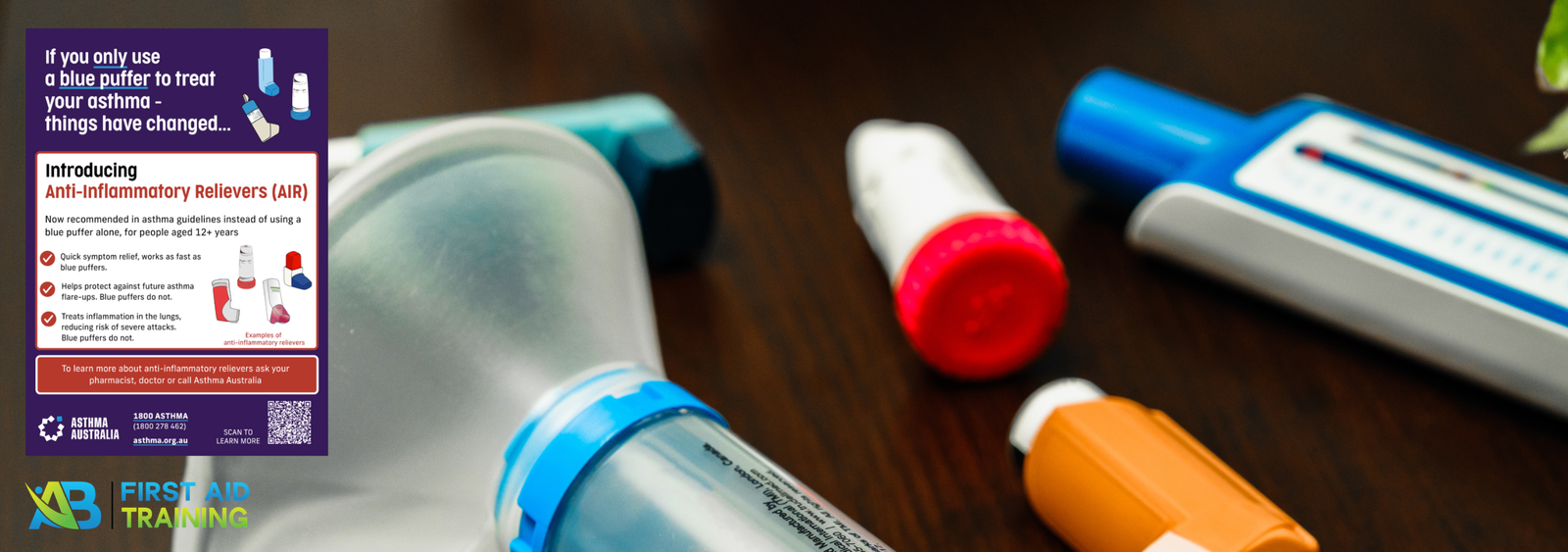
Asthma is one of the most common chronic conditions in Australian children. According to Asthma Australia, around 1 in 9 Australians has asthma, and school-age children are among the most frequently affected. Physical activity, cold air, allergens, and respiratory infections are all common triggers in a school setting.
DET Victoria requires schools to have an asthma management policy and ensure staff can respond to an asthma attack appropriately. Students with diagnosed asthma should have an Asthma Action Plan signed by their treating doctor, which school staff should be familiar with and have access to.
The four-step asthma first aid approach is the standard response: sit the person upright, give four puffs of a blue reliever inhaler (such as Ventolin), wait four minutes, and give four more puffs if there is no improvement. If the person does not improve after a second round, call Triple Zero (000) immediately. Staff should also be aware of current ASCIA guidelines, which have introduced updated protocols for adults in recent years — another reason why up-to-date, accredited training matters.
Head Injuries and Concussion
Head injuries happen regularly in schools, particularly during physical education, sport, and playground activities. They range from minor bumps and grazes to more serious concussions and, in rare cases, skull fractures.
Concussion is a significant concern that is sometimes underestimated. Sports medicine guidelines and Safe Work Australia both emphasise that any student who has received a blow to the head and is showing symptoms — confusion, headache, dizziness, balance problems, nausea, or memory loss — should be removed from activity immediately and not allowed to return to sport or vigorous physical activity on the same day. This is the “if in doubt, sit them out” principle, and it applies to any suspected head knock, not just obvious ones.
Staff should assess the student, notify parents or guardians, and arrange for medical review. For any head injury involving loss of consciousness, seizure, repeated vomiting, or worsening symptoms, Triple Zero (000) should be called without delay.
Seizures
Seizures can be confronting to witness, particularly for staff who have not received specific training. Epilepsy is one of the most common neurological conditions in children, and some students may experience their first seizure at school.
The key first aid response is to protect the person from injury. Clear the area around them, cushion their head, do not restrain their movements, and do not put anything in their mouth. Once the seizure has stopped, roll them into the recovery position and monitor their breathing closely.
Schools with students who have known seizure conditions should have individual health care plans on file, and where relevant, emergency medication protocols — such as intranasal midazolam — should be documented and staff trained in their use. Call Triple Zero (000) if the seizure lasts longer than five minutes, if the person does not regain consciousness after the seizure ends, if a second seizure follows quickly, or if it appears to be the person’s first known seizure.
Fractures and Musculoskeletal Injuries
Broken bones, sprains, and dislocations occur regularly in school environments, most often during sport and physical activity. While these injuries are rarely life-threatening, poor handling at the scene can make them significantly worse.
The RICE method — Rest, Ice, Compression, Elevation — remains appropriate for soft tissue injuries such as sprains and strains. For suspected fractures, the priority is to immobilise the affected area, manage the student’s distress, and arrange for medical attention. Staff should not attempt to straighten a broken limb. If there is any concern about a spinal injury following a fall or collision, keep the person still and call for emergency services.
Bleeding and Wound Management
Minor cuts and abrasions are among the most frequent first aid situations in any school. Most are straightforward to manage, but staff should also know how to respond to more serious bleeding.
For significant bleeding, apply firm direct pressure with a clean cloth or dressing, elevate the limb if possible, and maintain pressure until the bleeding slows or help arrives. Staff should use gloves where available to reduce infection risk. Any wound that is deep, gaping, or will not stop bleeding after ten minutes of direct pressure should be referred for medical assessment. Puncture wounds and bites also warrant medical review even when they appear minor.
Choking
Choking is more common in younger students, particularly in early primary years, but it can happen at any age. It is most likely to occur during mealtimes, though students can also choke on objects, particularly in supervised play settings.
For a conscious person who is choking and unable to clear the object themselves, give up to five firm back blows between the shoulder blades, followed by up to five abdominal thrusts (Heimlich manoeuvre) for students aged eight and over. For younger children and infants, the technique differs — back blows are used with the child positioned face down, with no abdominal thrusts. If the obstruction is not cleared, call Triple Zero (000) immediately.
Why Training Matters More Than Guidelines
Reading about what to do in an emergency and being able to act decisively in the moment are two very different things. First aid knowledge fades without practice, and in a real situation — with a distressed student, concerned classmates, and limited time — it is trained muscle memory that makes the difference.
WorkSafe Victoria and DET Victoria both recognise that having theoretical knowledge is not the same as being trained. Schools are required to have appropriately trained first aid personnel on site during school hours and at school activities. For staff looking to meet those requirements and feel genuinely confident, current accredited training is the most practical step available.
Build Your School’s First Aid Confidence
AB First Aid offers accredited first aid training designed for school staff in Tullamarine and across Melbourne. Our sessions cover all of the scenarios outlined in this post, with practical hands-on learning that builds real confidence — not just a certificate to file away. Whether you are meeting a compliance requirement or refreshing skills that are well overdue, we keep it straightforward and genuinely useful.
Book your first aid training with AB First Aid and make sure your school is ready for whatever the day brings.
References
- ASCIA — Anaphylaxis Management in Schools: https://www.allergy.org.au/hp/anaphylaxis/school-action-plans
- Asthma Australia — Asthma in Schools: https://www.asthmaaustralia.org.au/vic/education-and-training/for-schools
- Department of Education and Training Victoria — Anaphylaxis Policy: https://www2.education.vic.gov.au/pal/anaphylaxis/policy
- Department of Education and Training Victoria — Asthma Policy: https://www2.education.vic.gov.au/pal/asthma/policy
- Safe Work Australia — First Aid in the Workplace: https://www.safeworkaustralia.gov.au/safety-topic/hazards/first-aid
- WorkSafe Victoria — First Aid: https://www.worksafe.vic.gov.au/first-aid
- Epilepsy Foundation Australia — Seizure First Aid: https://www.epilepsy.org.au/about-epilepsy/seizure-first-aid/

Book A Course
Recent Blogs
- All Posts
- Compliance
- First Aid

Learn how NDIS support workers should respond to seizures and epileptic episodes — duty of care, safe positioning, documentation, and...
Victorian schools must comply with Ministerial Order 1160 on anaphylaxis management. Learn what DET requires for staff training, Action Plans,...

Australia now has a second PBS-listed adrenaline auto-injector. Here’s what childcare educators, school staff and parents need to know about...
AB First Aid Training & Compliance
The Most Common First Aid Emergencies in Victorian Schools — And How Staff Should Respond
Schools are busy, unpredictable environments. On any given day, a student might have an asthma attack during PE, a child with a known allergy could go into anaphylaxis at lunch, or someone might take a hard knock to the head on the oval. For school staff — whether teachers, learning support aides, office staff, or administrators — knowing how to respond to these situations is not just good practice. In Victoria, it is a legal requirement.
This post covers the first aid emergencies that occur most frequently in Victorian schools, what staff should know about each one, and why proper training is the only way to be genuinely prepared when something goes wrong.
Anaphylaxis
Anaphylaxis is a severe, life-threatening allergic reaction that can develop within minutes of exposure to a trigger. In schools, the most common triggers include foods such as peanuts, tree nuts, milk, eggs, and sesame, as well as insect stings and some medications.
The Department of Education and Training (DET) Victoria requires all government schools to have an anaphylaxis management policy. ASCIA (the Australasian Society of Clinical Immunology and Allergy) provides the national guidelines for anaphylaxis management in schools. Each enrolled student with a known anaphylaxis risk must have an individual anaphylaxis management plan on file, and staff who are likely to be in contact with those students must be trained in how to recognise and respond to anaphylaxis — including how to use an adrenaline auto-injector such as an EpiPen.
Recognising anaphylaxis early is critical. Symptoms can include hives or skin flushing, swelling of the face or throat, difficulty breathing, abdominal pain, vomiting, and collapse. The correct response is to administer the student’s prescribed adrenaline auto-injector, lay them flat (or sit them up if breathing is difficult), call Triple Zero (000), and continue monitoring until emergency services arrive.
Asthma Attacks
Asthma is one of the most common chronic conditions in Australian children. According to Asthma Australia, around 1 in 9 Australians has asthma, and school-age children are among the most frequently affected. Physical activity, cold air, allergens, and respiratory infections are all common triggers in a school setting.
DET Victoria requires schools to have an asthma management policy and ensure staff can respond to an asthma attack appropriately. Students with diagnosed asthma should have an Asthma Action Plan signed by their treating doctor, which school staff should be familiar with and have access to.
The four-step asthma first aid approach is the standard response: sit the person upright, give four puffs of a blue reliever inhaler (such as Ventolin), wait four minutes, and give four more puffs if there is no improvement. If the person does not improve after a second round, call Triple Zero (000) immediately. Staff should also be aware of current ASCIA guidelines, which have introduced updated protocols for adults in recent years — another reason why up-to-date, accredited training matters.
Head Injuries and Concussion
Head injuries happen regularly in schools, particularly during physical education, sport, and playground activities. They range from minor bumps and grazes to more serious concussions and, in rare cases, skull fractures.
Concussion is a significant concern that is sometimes underestimated. Sports medicine guidelines and Safe Work Australia both emphasise that any student who has received a blow to the head and is showing symptoms — confusion, headache, dizziness, balance problems, nausea, or memory loss — should be removed from activity immediately and not allowed to return to sport or vigorous physical activity on the same day. This is the “if in doubt, sit them out” principle, and it applies to any suspected head knock, not just obvious ones.
Staff should assess the student, notify parents or guardians, and arrange for medical review. For any head injury involving loss of consciousness, seizure, repeated vomiting, or worsening symptoms, Triple Zero (000) should be called without delay.
Seizures
Seizures can be confronting to witness, particularly for staff who have not received specific training. Epilepsy is one of the most common neurological conditions in children, and some students may experience their first seizure at school.
The key first aid response is to protect the person from injury. Clear the area around them, cushion their head, do not restrain their movements, and do not put anything in their mouth. Once the seizure has stopped, roll them into the recovery position and monitor their breathing closely.
Schools with students who have known seizure conditions should have individual health care plans on file, and where relevant, emergency medication protocols — such as intranasal midazolam — should be documented and staff trained in their use. Call Triple Zero (000) if the seizure lasts longer than five minutes, if the person does not regain consciousness after the seizure ends, if a second seizure follows quickly, or if it appears to be the person’s first known seizure.
Fractures and Musculoskeletal Injuries
Broken bones, sprains, and dislocations occur regularly in school environments, most often during sport and physical activity. While these injuries are rarely life-threatening, poor handling at the scene can make them significantly worse.
The RICE method — Rest, Ice, Compression, Elevation — remains appropriate for soft tissue injuries such as sprains and strains. For suspected fractures, the priority is to immobilise the affected area, manage the student’s distress, and arrange for medical attention. Staff should not attempt to straighten a broken limb. If there is any concern about a spinal injury following a fall or collision, keep the person still and call for emergency services.
Bleeding and Wound Management
Minor cuts and abrasions are among the most frequent first aid situations in any school. Most are straightforward to manage, but staff should also know how to respond to more serious bleeding.
For significant bleeding, apply firm direct pressure with a clean cloth or dressing, elevate the limb if possible, and maintain pressure until the bleeding slows or help arrives. Staff should use gloves where available to reduce infection risk. Any wound that is deep, gaping, or will not stop bleeding after ten minutes of direct pressure should be referred for medical assessment. Puncture wounds and bites also warrant medical review even when they appear minor.
Choking
Choking is more common in younger students, particularly in early primary years, but it can happen at any age. It is most likely to occur during mealtimes, though students can also choke on objects, particularly in supervised play settings.
For a conscious person who is choking and unable to clear the object themselves, give up to five firm back blows between the shoulder blades, followed by up to five abdominal thrusts (Heimlich manoeuvre) for students aged eight and over. For younger children and infants, the technique differs — back blows are used with the child positioned face down, with no abdominal thrusts. If the obstruction is not cleared, call Triple Zero (000) immediately.
Why Training Matters More Than Guidelines
Reading about what to do in an emergency and being able to act decisively in the moment are two very different things. First aid knowledge fades without practice, and in a real situation — with a distressed student, concerned classmates, and limited time — it is trained muscle memory that makes the difference.
WorkSafe Victoria and DET Victoria both recognise that having theoretical knowledge is not the same as being trained. Schools are required to have appropriately trained first aid personnel on site during school hours and at school activities. For staff looking to meet those requirements and feel genuinely confident, current accredited training is the most practical step available.
Build Your School’s First Aid Confidence
AB First Aid offers accredited first aid training designed for school staff in Tullamarine and across Melbourne. Our sessions cover all of the scenarios outlined in this post, with practical hands-on learning that builds real confidence — not just a certificate to file away. Whether you are meeting a compliance requirement or refreshing skills that are well overdue, we keep it straightforward and genuinely useful.
Book your first aid training with AB First Aid and make sure your school is ready for whatever the day brings.
References
- ASCIA — Anaphylaxis Management in Schools: https://www.allergy.org.au/hp/anaphylaxis/school-action-plans
- Asthma Australia — Asthma in Schools: https://www.asthmaaustralia.org.au/vic/education-and-training/for-schools
- Department of Education and Training Victoria — Anaphylaxis Policy: https://www2.education.vic.gov.au/pal/anaphylaxis/policy
- Department of Education and Training Victoria — Asthma Policy: https://www2.education.vic.gov.au/pal/asthma/policy
- Safe Work Australia — First Aid in the Workplace: https://www.safeworkaustralia.gov.au/safety-topic/hazards/first-aid
- WorkSafe Victoria — First Aid: https://www.worksafe.vic.gov.au/first-aid
- Epilepsy Foundation Australia — Seizure First Aid: https://www.epilepsy.org.au/about-epilepsy/seizure-first-aid/
Have You Read These Articals Yet?
- All Posts
- Compliance
- First Aid
Learn how NDIS support workers should respond to seizures and epileptic episodes — duty of care, safe positioning, documentation, and...
Victorian schools must comply with Ministerial Order 1160 on anaphylaxis management. Learn what DET requires for staff training, Action Plans,...
Australia now has a second PBS-listed adrenaline auto-injector. Here’s what childcare educators, school staff and parents need to know about...