
Working in the electrical trade means dealing with real physical risks every single day. Falls from height, electrical contact, heat exposure, lacerations — these aren’t hypotheticals. They’re regular hazards that put workers in harm’s way, and when something goes wrong on an electrical worksite, the person standing closest to the injured worker is usually a tradie, not a paramedic.
That’s why first aid knowledge isn’t a nice-to-have for electricians and construction workers. It’s a genuine workplace safety requirement — and more than that, it’s the difference between a colleague recovering or not.
Here’s a rundown of the most common first aid emergencies on electrical worksites in Australia, and what to do when they happen.
Electrical Contact and Shock
Electrical contact is one of the most serious risks in the trade. According to Safe Work Australia, electricity is responsible for a significant number of serious injuries and fatalities in the construction sector each year — including electrocution, severe burns, and cardiac arrest.
When a person has been exposed to an electrical current, the first priority is safety. Never touch the injured person while they are still in contact with the current. Turn off the power at the source if it is safe to do so. Only approach the person once you are certain the electrical supply has been isolated.
Once safe:
- Call 000 immediately
- Check for responsiveness and breathing
- Begin CPR if the person is unresponsive and not breathing normally — follow the Australian Resuscitation Council (ARC) DRSABCD guidelines
- Treat any visible burns with cool running water for 20 minutes
- Keep the person warm and still while waiting for emergency services
Even if someone appears fine after electrical contact, they must be assessed by medical personnel. Internal injuries, cardiac irregularities, and delayed symptoms can occur hours after the incident.
Falls from Height
Falls are the leading cause of serious injury and death in the construction industry across Australia. WorkSafe Victoria reports that falls from ladders, scaffolding, roofs, and elevated platforms are among the most common mechanisms of serious injury for workers in the trades.
When responding to a fall:
- Do not move the injured person unless they are in immediate danger — a fall significant enough to cause injury may also have caused spinal or neck trauma
- Call 000
- If the person is unresponsive and not breathing, begin CPR — spinal risk does not override the need for resuscitation
- Control any external bleeding with firm, direct pressure
- Keep the person warm and reassure them while help arrives
- Monitor their level of consciousness closely, as it can deteriorate rapidly after a head or chest impact
Any fall from over one metre should be treated as potentially serious, even if the person insists they’re fine.
Lacerations and Penetrating Wounds
Sharp tools, metal conduit, exposed wires, and construction materials mean lacerations and puncture wounds are common on electrical worksites. Deep cuts, especially those involving hands or forearms, can cause significant blood loss quickly.
To manage a serious cut:
- Apply firm, direct pressure to the wound with a clean cloth or bandage
- Do not remove embedded objects — apply pressure around them
- Elevate the injured limb if possible
- If bleeding does not slow after several minutes of continuous pressure, apply a tourniquet for life-threatening limb bleeds and call 000
- Seek medical attention for any wound that is deep, gaping, or contaminated
Under the Safe Work Australia First Aid in the Workplace Code of Practice (2024), high-risk worksites must have adequate first aid supplies and trained personnel on site. For electrical and construction work, this means accessible kits and workers who know how to use them.
Heat Stress and Heat Exhaustion
Electrical workers frequently work outdoors, in roof spaces, sub-floor areas, or poorly ventilated commercial buildings — all environments where heat exposure is a real concern, particularly during Victorian summers.
Heat exhaustion can progress to heatstroke rapidly if not managed. Signs include heavy sweating, weakness, pale or cold skin, nausea, headache, and dizziness.
To respond:
- Move the person to a cool, shaded area immediately
- Remove excess clothing and cool the skin with water or a damp cloth
- Encourage small sips of water if they are conscious and able to swallow
- Lay them down with legs slightly elevated
- Call 000 if symptoms don’t improve within 30 minutes, or if the person becomes confused, stops sweating, or loses consciousness
WorkSafe Victoria advises that heat management plans — including adequate rest breaks, hydration, and monitoring — are part of employer duty of care obligations on worksites.
Eye Injuries
Arc flash, flying debris, metal shavings, and chemical splashes are all common causes of eye injuries in electrical and construction settings. Eye injuries can cause permanent damage if not treated promptly.
If something enters the eye:
- Do not rub the eye
- For loose particles: gently irrigate with clean water or sterile saline for 15–20 minutes
- For embedded objects: do not attempt to remove them — cover the eye loosely and get to an emergency department
- For chemical splashes: flush immediately with large amounts of water and call the Poisons Information Centre on 13 11 26
The right personal protective equipment (PPE) prevents most eye injuries — but when PPE fails or isn’t worn, fast first aid response matters.
Musculoskeletal Injuries
Sprains, strains, and back injuries from manual handling, awkward positions, and repetitive tasks are among the most common injuries affecting electrical workers. While they’re rarely life-threatening, they can end careers if not managed properly.
For a musculoskeletal injury:
- Stop the activity causing the pain
- Apply the RICER method: Rest, Ice, Compression, Elevation, and Referral to a health professional
- Do not encourage the person to “walk it off” if they are in significant pain
- Document the injury and report it according to your site’s WHS procedures
WorkSafe Victoria requires that all workplace injuries — including soft-tissue injuries — are recorded and that injured workers receive appropriate medical attention.
What This Means for Worksite First Aid Training
Knowing what to do in the first few minutes of an emergency is not something most people pick up by chance. It takes training, practice, and regular refreshing of skills.
Under the Safe Work Australia First Aid in the Workplace Code of Practice, employers in high-risk industries are required to ensure there are sufficient first aid officers on site, that first aid kits are stocked and accessible, and that workers know how to respond in an emergency.
Whether you’re the site supervisor, the apprentice, or somewhere in between — having current first aid skills makes your worksite safer for everyone.
Ready to Get Your Ticket Up to Date?
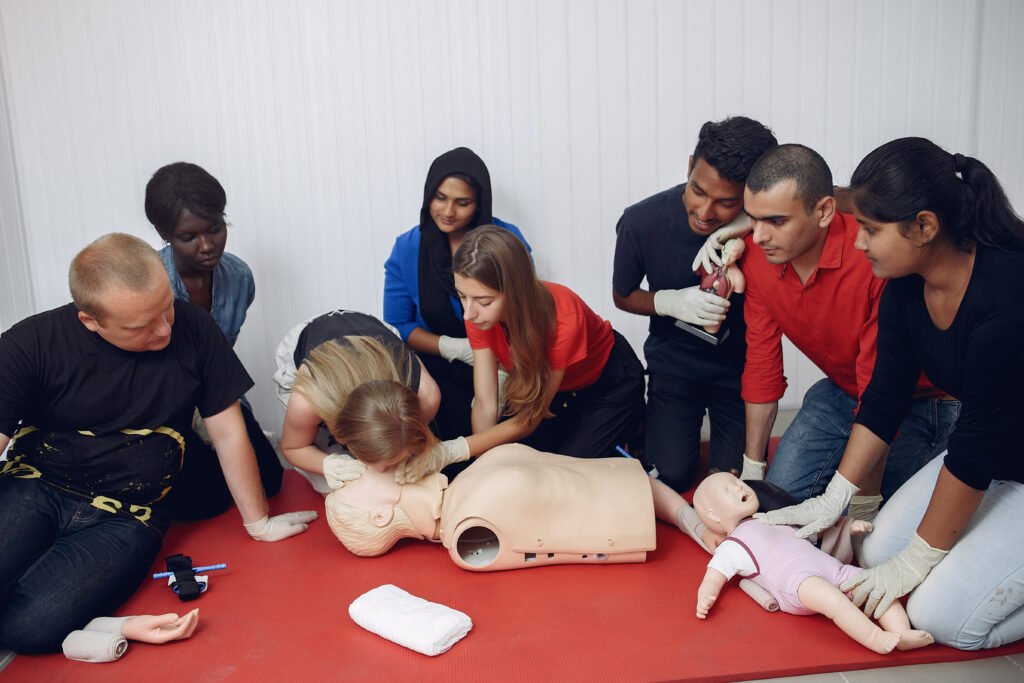
AB First Aid runs practical, industry-relevant first aid and CPR training in Tullamarine, with courses suited to construction workers, electricians, and trade professionals. Book your first aid training or view the full course schedule and enrol directly online. Courses run regularly — so there’s no reason to put it off.
References
- Safe Work Australia, First Aid in the Workplace Code of Practice (2024). https://www.safeworkaustralia.gov.au
- WorkSafe Victoria, Falls from Height. https://www.worksafe.vic.gov.au
- Australian Resuscitation Council (ARC), DRSABCD Action Plan. https://resus.org.au
- WorkSafe Victoria, Working Safely in Heat. https://www.worksafe.vic.gov.au
- Poisons Information Centre Australia: 13 11 26