
Asthma is one of the most common chronic health conditions in Australian children. Around one in nine Australians has asthma, and young children are particularly vulnerable. For childcare educators, the chance of having a child with asthma in your care isn’t a question of if — it’s a question of when.
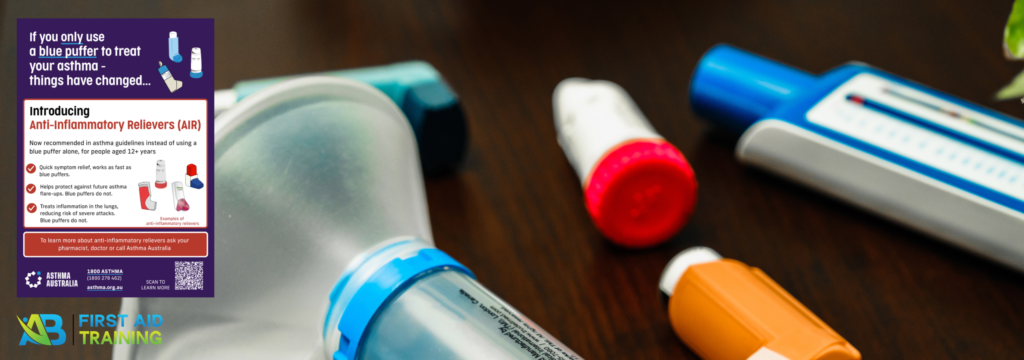
What’s changed recently is how asthma attacks should be managed. The Australasian Society of Clinical Immunology and Allergy (ASCIA) has updated its guidelines to recommend a new approach called AIR therapy — Anti-Inflammatory Reliever therapy — which replaces the traditional blue puffer (salbutamol) as the first-line treatment in many situations.
This post explains what AIR therapy is, what it means for your childcare service’s asthma procedures, and how to make sure your team is prepared.
Why Asthma Management in Childcare Matters
Asthma is a chronic inflammatory condition of the airways that causes recurring episodes of wheezing, coughing, shortness of breath, and chest tightness. In young children, symptoms can appear suddenly and escalate quickly — particularly in cold weather, during physical activity, or following exposure to triggers like dust, pollen, or respiratory infections.
Children with asthma must have an ASCIA Action Plan for Asthma in place at their childcare service. This is a personalised plan prepared by their treating doctor that outlines their triggers, their regular preventer medication (if any), and the step-by-step emergency response if an attack occurs.
Under the Education and Care Services National Regulations 2011, childcare services are required to have policies and procedures for managing medical conditions — including asthma — and to follow the ASCIA guidelines. The AIR therapy update means those procedures need to be reviewed.
What Is AIR Therapy?
Until recently, the standard first aid response for an asthma attack was to use a reliever inhaler containing salbutamol (Ventolin) — the blue puffer — following the four-step asthma first aid protocol: four puffs, four breaths, four minutes, repeat.
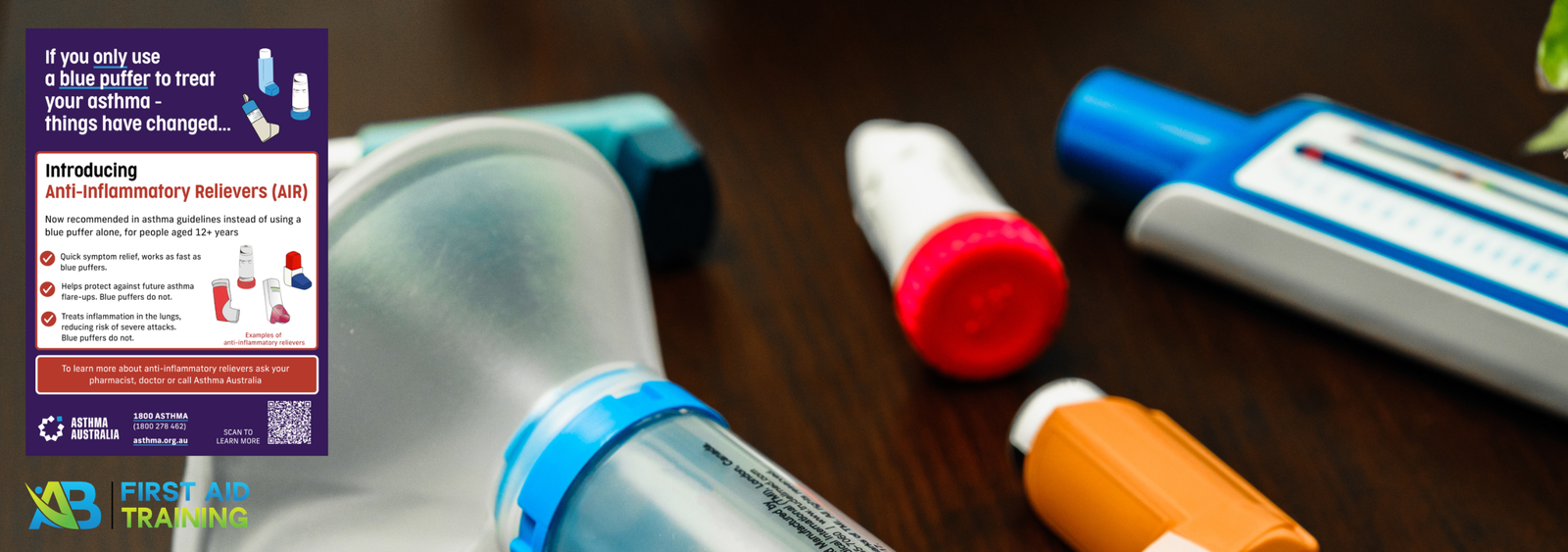
ASCIA now recommends a different approach for people on preventer therapy: Anti-Inflammatory Reliever (AIR) therapy, using a combination inhaler containing both budesonide and formoterol (brands include Symbicort, Breztri, and DuoResp). This type of inhaler acts as both a reliever and an anti-inflammatory, treating the underlying cause of an asthma attack — not just the immediate symptoms.
The key reason for the change is that salbutamol alone does not address the airway inflammation that drives most asthma attacks. Using a budesonide/formoterol combination inhaler provides faster and more sustained relief, and reduces the risk of a severe or life-threatening episode.
For childcare educators, this change is significant because:
- Some children in your care may now be prescribed a budesonide/formoterol inhaler as their reliever — not a blue puffer
- Their ASCIA Action Plan will specify which inhaler to use and when
- The four-step protocol may differ from what you’ve been trained on previously
- Blue puffer (salbutamol) is still the appropriate first-line response for children who do not have a preventer inhaler prescribed
What This Means for Your ASCIA Action Plans
Every child with asthma at your service should have a current ASCIA Action Plan for Asthma. These plans are updated periodically by ASCIA to reflect current evidence, and the latest version incorporates AIR therapy.
If a child’s existing plan was prepared before the AIR therapy update, their family and treating GP should be asked to review and update it. An outdated plan that specifies salbutamol as the reliever when the child is now on a budesonide/formoterol combination could lead to incorrect treatment in an emergency.
As a childcare service, you should:
- Ensure every child with known asthma has a current ASCIA Action Plan on file, signed by their doctor
- Review all existing plans to confirm they reflect the child’s current prescribed medication
- Ask families to request an updated plan from their GP or specialist if the plan is more than 12 months old
- Keep all action plans easily accessible to staff — not in a filing cabinet in the office
Recognising Asthma Symptoms in Young Children
Young children may not be able to tell you they’re having trouble breathing. As an educator, you need to watch for:
- Persistent coughing, particularly at night or during physical activity
- Wheeze — a high-pitched whistling sound when breathing out
- Shortness of breath or visibly laboured breathing
- A child who seems quiet, withdrawn, or reluctant to move
- Visible use of neck or chest muscles when breathing
- A pale or grey colour around the mouth
If a child shows signs of a severe or life-threatening asthma attack — such as inability to speak more than a few words, an exhausted or limp appearance, lips or fingernails turning blue, or they are not responding to their reliever — call Triple Zero (000) immediately.
The Four-Step Asthma First Aid Protocol
For children without a budesonide/formoterol inhaler prescribed (or when the prescribed inhaler is unavailable), the standard four-step protocol still applies using a blue puffer and spacer:
- Step 1: Give four puffs of reliever (blue puffer) through a spacer
- Step 2: Ask the child to take four breaths from the spacer after each puff
- Step 3: Wait four minutes
- Step 4: If there is no improvement, repeat — and call 000 if the child is not improving after the second round
For children on AIR therapy, follow the specific instructions on their ASCIA Action Plan, which will specify the correct inhaler, the number of doses, and when to escalate to emergency services.
Always use a spacer with a metered dose inhaler — it significantly improves the amount of medication that reaches the airways, particularly in young children.
Victorian Regulatory Requirements
Under the Education and Care Services National Regulations 2011, childcare services must maintain a current ASCIA Action Plan for each child with known asthma (Regulation 90), and ensure that at least one educator present at all times holds a first aid certificate that includes anaphylaxis and emergency asthma management (Regulation 136).
ACECQA’s National Quality Standard (NQS) Element 2.1.1 requires services to actively implement risk minimisation strategies for children with identified health needs. That includes reviewing and acting on updates to national asthma management guidelines — such as the AIR therapy change.
WorkSafe Victoria also expects employers to provide a safe environment for all people in the workplace — including children in care — and to maintain current emergency procedures.
Update Your Team’s Training
The AIR therapy update is a good reason to revisit your team’s first aid knowledge. If your educators were trained before this change, they may not be familiar with budesonide/formoterol inhalers or the updated ASCIA Action Plan format. A refresher — or a full recertification — brings your whole team up to date.
At AB First Aid, our HLTAID012 Provide First Aid in an Education and Care Setting course is designed for early childhood educators and covers current asthma management guidelines including AIR therapy, anaphylaxis response, CPR for infants and children, and a range of common childcare first aid scenarios. We run regular public courses at our Tullamarine training centre, and we can arrange group training at your service.
View our upcoming course schedule or book your team at AB First Aid in Tullamarine. Group discounts are available for childcare services — contact us to discuss on-site training options.
References
- Australasian Society of Clinical Immunology and Allergy (ASCIA). (2024). ASCIA Action Plan for Asthma. https://www.allergy.org.au/patients/asthma-and-allergy/asthma
- Australasian Society of Clinical Immunology and Allergy (ASCIA). (2024). AIR (Anti-Inflammatory Reliever) therapy for asthma. https://www.allergy.org.au/hp/asthma/air-therapy
- Asthma Australia. (2024). Asthma statistics. https://www.asthma.org.au/about-asthma/what-is-asthma/asthma-statistics/
- ACECQA. (2024). Medical conditions policy guidance. https://www.acecqa.gov.au/resources/supporting-materials/infosheet/medical-conditions-policy-guidance
- Education and Care Services National Regulations 2011 (Cth), reg 90, 136. https://www.legislation.gov.au/Details/F2011L01784
- NPS MedicineWise. (2024). Asthma medicines update: AIR therapy. https://www.nps.org.au/professionals/asthma-treatment-update

Book A Course
Recent Blogs
- All Posts
- Compliance
- First Aid
The correct first aid for burns and scalds in early childhood services, from 20 minutes of cool running water to...
A practical guide for Victorian electrical contractors on first aider numbers, qualifications, first aid kits and AEDs, and how to...
Victorian childcare services must have staff trained in anaphylaxis management, and this guide covers what that looks like in practice...
AB First Aid Training & Compliance
Ask Us About Our Full Service Compliance & Safety Package
FREE When You Partner With Us!
Have You Read These Articals Yet?
- All Posts
- Compliance
- First Aid
The correct first aid for burns and scalds in early childhood services, from 20 minutes of cool running water to...
A practical guide for Victorian electrical contractors on first aider numbers, qualifications, first aid kits and AEDs, and how to...
Victorian childcare services must have staff trained in anaphylaxis management, and this guide covers what that looks like in practice...