
When a student collapses on the oval, chokes in the canteen, or has a severe allergic reaction in a classroom, the staff nearby are the first responders. How prepared they are in that moment depends entirely on the training and systems the school has in place.
Victorian schools operate under clear legal obligations when it comes to first aid and emergency health management. This post sets out what those obligations are, where they come from, and what schools need to do to meet them — including the specific requirements around anaphylaxis, asthma, and CPR that catch many schools off-guard.
The Legal Framework for Schools in Victoria
Victorian government schools are governed by the Education and Training Reform Act 2006 (Vic) and the policies issued by the Department of Education (DET). For independent and Catholic schools, the same legislative obligations largely apply through the Education and Care Services National Law and the Registration to Teach in Victoria requirements, with accreditation bodies setting additional standards.
The Department of Education’s First Aid policy sets the minimum requirements for all government schools. It requires that every school:
Maintains at least one trained first aider on-site during school hours and school-sanctioned activities. The required qualification is Provide First Aid (HLTAID011) or equivalent, renewed every three years, with CPR (HLTAID009) renewed annually.
Has current first aid procedures that are documented, accessible to staff, and reviewed regularly. This includes emergency procedures for anaphylaxis, asthma, seizures, and other foreseeable medical events given the student population.
Maintains student health information for all enrolled students with known medical conditions, and ensures that this information is available to relevant staff, including relief and casual staff.
Anaphylaxis Management: The Ministerial Order
Anaphylaxis management in Victorian government schools is not just best practice — it is mandated under Ministerial Order No. 706 (Anaphylaxis Management in Schools). This Order applies to all government schools and specifies a range of obligations including risk minimisation strategies, individual anaphylaxis management plans (IAMPs), and staff training.
Under the Order, schools must ensure that:
All staff who have contact with a student at risk of anaphylaxis are trained in anaphylaxis emergency response, including how to use an auto-injector (EpiPen or Anapen). This training must be refreshed at least every two years.
An IAMP is in place for every student with a known allergy who is at risk of anaphylaxis. The plan is developed in consultation with the student’s doctor and parents/guardians, and must be accessible to all relevant staff.
A general-use auto-injector (adrenaline auto-injector for general use) is kept at the school for the emergency treatment of a student who has an unexpected anaphylactic reaction and whose own device is not available.
The Victorian Curriculum and Assessment Authority (VCAA) and DET publish training resources for schools through the Anaphylaxis e-training for Education Staff program, which is accredited by the Australasian Society of Clinical Immunology and Allergy (ASCIA).
Asthma Management in Schools
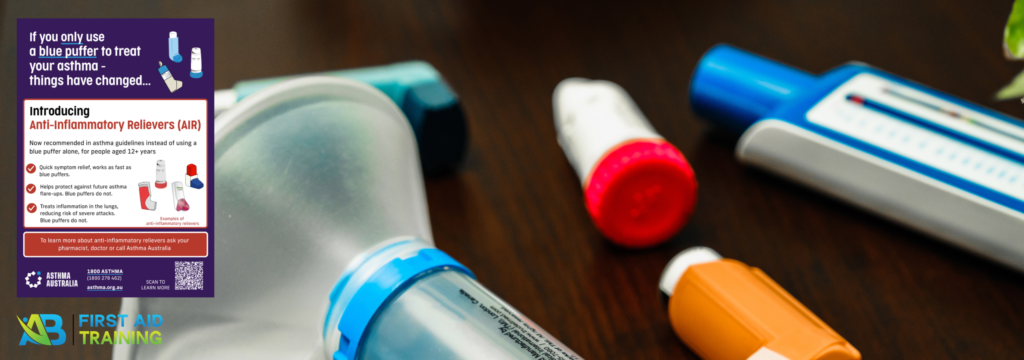
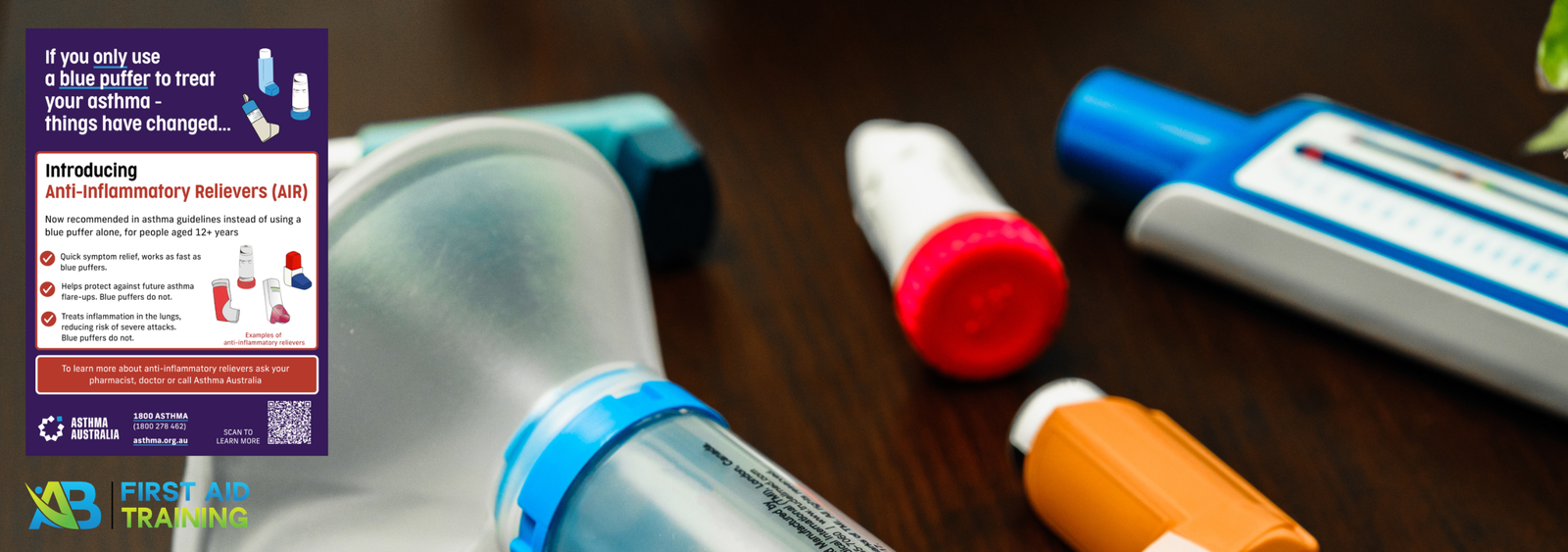
Asthma is the most common chronic medical condition among Australian school-age children, affecting around one in nine children. The Department of Education’s Asthma policy requires schools to have an asthma management plan and to ensure that relevant staff have completed approved asthma first aid training.
Like anaphylaxis, asthma management requires individual plans (Asthma Action Plans) for students with diagnosed asthma, and schools must keep appropriate medication (reliever puffer) accessible for students who require it. Schools should also hold a general-use reliever puffer for emergencies involving a student whose own medication is not available.
Asthma Australia provides approved one-hour asthma first aid training for education staff, which satisfies the DET requirement. Renewal is required every three years.
Seizure Response and Other Medical Emergencies
Beyond anaphylaxis and asthma, schools need to be prepared for a range of other medical emergencies. Febrile seizures in younger students (particularly those in prep and early primary), epileptic episodes in students with known conditions, diabetic emergencies, and cardiac events are all scenarios that school staff may face.
The standard Provide First Aid (HLTAID011) qualification covers the initial response to most of these scenarios. For students with known epilepsy or seizure disorders, the school must have an individual healthcare plan in place and relevant staff should be familiar with that student’s specific management requirements.
Cardiac emergencies in schools — while statistically rare — can and do occur. The survival rate for out-of-hospital cardiac arrest is significantly higher when bystander CPR and early defibrillation are provided. Many Victorian schools now have automated external defibrillators (AEDs) on-site, and there is a strong case for ensuring that more than one or two staff members know how to use them.
Relief Staff and Excursions
Two situations that commonly expose compliance gaps in schools are the use of relief staff and off-site excursions.
When a school’s trained first aider is absent and replaced by a relief teacher without first aid qualifications, the school is technically out of compliance with its obligation to have a trained first aider on-site at all times. Schools should have a system for identifying when this risk is likely to arise and a plan for how to manage it — for example, by identifying and training a larger pool of first aid-qualified staff so coverage is not dependent on one or two individuals.
For school excursions, the obligation to have a trained first aider available applies equally. The DET Excursions policy requires that appropriate first aid arrangements are considered in the risk assessment for every excursion. For activities with higher inherent risk — water-based activities, remote locations, sport with significant injury potential — additional precautions are expected.
How Many Staff Need First Aid Training?
The DET policy requires at least one trained first aider on-site at all times. In practice, most schools train a broader cohort of staff to ensure coverage across different days, shifts, and locations within the school. The appropriate number will depend on the size of the school, the layout of the campus, the range of year levels, and the health needs of the enrolled student population.
Schools that have identified students with complex medical needs — including multiple students with anaphylaxis, students with epilepsy, students with Type 1 diabetes — should ensure that the trained staff pool is sufficient to guarantee someone familiar with those students’ needs is always present when those students are in attendance.
Group Training for School Staff
Coordinating individual staff members to attend public training sessions can be difficult around teaching loads, supervision requirements, and term schedules. Many schools find it more practical to arrange group training for their staff team on a pupil-free day or during school holidays, ensuring the whole staff group trains together and all certificates are renewed at the same time.
Group training also enables the facilitator to tailor scenarios to the school setting — including how to respond to an anaphylactic reaction in a classroom with 25 other students present, or how to manage a student who collapses during PE while another staff member supervises the rest of the group.
Book First Aid Training for Your School
AB First Aid provides nationally recognised first aid and CPR training at our centre in Tullamarine, Melbourne. We work with Victorian schools to arrange group training sessions that fit around the school calendar, including HLTAID011 (Provide First Aid) and HLTAID009 (CPR) renewal.
Our training is practical and scenario-based, designed for the situations school staff actually face. We’re experienced working with education teams and can build in content specific to your school’s context — including paediatric first aid, anaphylaxis response practice, and seizure management.
View our public course schedule or enquire about a group booking at abfirstaid.com.au. We’re based in Tullamarine and regularly work with primary schools, secondary schools, and early learning centres across Melbourne and regional Victoria.
References
- Department of Education Victoria. First Aid policy. education.vic.gov.au
- Department of Education Victoria. Anaphylaxis policy and Ministerial Order 706. education.vic.gov.au
- Department of Education Victoria. Asthma policy. education.vic.gov.au
- Australasian Society of Clinical Immunology and Allergy (ASCIA). Anaphylaxis e-training for education staff. allergy.org.au
- Asthma Australia. Asthma first aid training for schools. asthma.org.au
- Education and Training Reform Act 2006 (Vic). legislation.vic.gov.au

Book A Course
Recent Blogs
- All Posts
- Compliance
- First Aid

The correct first aid for burns and scalds in early childhood services, from 20 minutes of cool running water to...
A practical guide for Victorian electrical contractors on first aider numbers, qualifications, first aid kits and AEDs, and how to...
Victorian childcare services must have staff trained in anaphylaxis management, and this guide covers what that looks like in practice...
AB First Aid Training & Compliance
Ask Us About Our Full Service Compliance & Safety Package
FREE When You Partner With Us!
Have You Read These Articals Yet?
- All Posts
- Compliance
- First Aid
The correct first aid for burns and scalds in early childhood services, from 20 minutes of cool running water to...
A practical guide for Victorian electrical contractors on first aider numbers, qualifications, first aid kits and AEDs, and how to...
Victorian childcare services must have staff trained in anaphylaxis management, and this guide covers what that looks like in practice...