
First Aid Requirements for Victorian Schools: What the Law Actually Requires
First aid compliance in Victorian schools is one of those areas where good intentions often aren’t enough. Many schools have a first aid officer, a cabinet stocked with supplies, and a general sense that they’re covered — but when you look at what the legislation and Department of Education guidelines actually require, the picture is sometimes more complicated.
This guide breaks down the legal requirements clearly, so principals, business managers, and first aid officers know exactly where they stand.
The Legislative Framework
First aid requirements for Victorian government schools are primarily governed by the Education and Training Reform Act 2006 and supporting Ministerial Orders, alongside the Department of Education (DET) First Aid Policy. Independent and Catholic schools are subject to similar obligations under their own regulatory frameworks, with the National School Reform Agreement providing a consistent baseline.
Unlike early childhood settings — which are regulated under the Education and Care Services National Law — schools in Victoria are primarily governed at the state level through DET. This distinction matters because the requirements differ in some important ways.
How Many First Aid Trained Staff Are Required?
Victorian government schools are required to ensure that at all times during school hours, at least one staff member with a current first aid qualification is present on the school premises.
In practice, this means a single designated first aid officer is the legal minimum. However, DET strongly encourages schools to have multiple trained staff members — particularly to provide coverage during excursions, camps, sporting events, and periods of staff leave. A school of 300 students relying on one first aid officer is technically compliant but operationally vulnerable.
For excursions and camps, at least one staff member attending must hold a current first aid qualification. If a student with a known medical condition requiring specific management (such as anaphylaxis or severe asthma) is attending, additional specific training may be required for the staff attending.
What Qualifications Are Required?
DET’s First Aid Policy specifies that the following nationally recognised units of competency are acceptable for school first aid officers:
- HLTAID011 Provide First Aid — the standard first aid certificate, formerly HLTAID003
- HLTAID009 Provide Cardiopulmonary Resuscitation — CPR only; suitable for supplementary training but not as a standalone qualification for the designated first aid officer role
The full HLTAID011 is the appropriate qualification for a school’s primary first aid officer. CPR-only qualifications do not meet the full requirement for this role.
How Often Must First Aid Training Be Renewed?
DET guidelines require that:
- HLTAID011 (First Aid) must be renewed every three years
- HLTAID009 (CPR) must be renewed annually
This is a common area where schools fall out of compliance without realising it. A staff member who completed their first aid certificate three years ago may assume they’re still covered, when in fact their qualification has lapsed. Schools should maintain a central register of staff qualifications with renewal dates clearly tracked.
Anaphylaxis and Asthma: Additional Obligations
Schools have specific obligations beyond general first aid when it comes to students with known anaphylaxis or asthma.
Under the Anaphylaxis Management Policy (Ministerial Order 706), all Victorian schools are required to: maintain an anaphylaxis management policy, hold a general-use adrenaline auto-injector (EpiPen) for general use, ensure staff are trained in anaphylaxis management using ASCIA-approved resources, and maintain individual Anaphylaxis Action Plans for all students with diagnosed anaphylaxis.
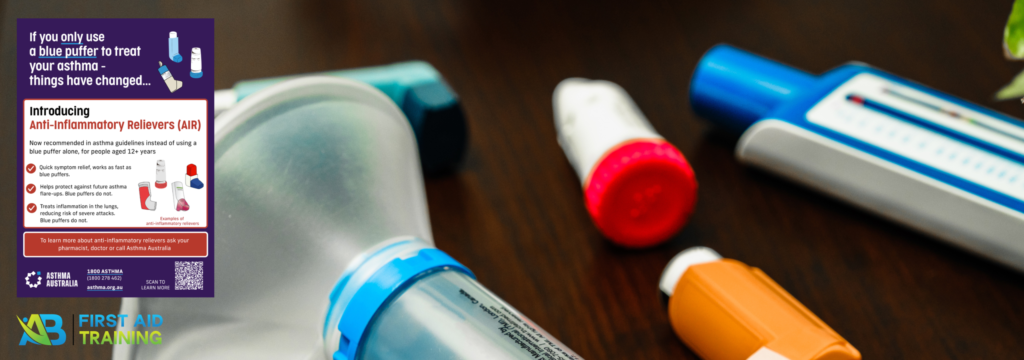
For asthma, schools must maintain an asthma management policy, hold a general-use reliever inhaler (salbutamol), ensure staff are aware of the Asthma Action Plans for students with diagnosed asthma, and have a spacer device available for use with the reliever inhaler.
Defibrillators (AEDs) in Schools
There is currently no legislative requirement for Victorian schools to hold an automated external defibrillator (AED). However, DET encourages schools to acquire and maintain one where possible, particularly given the known survival benefits when AEDs are used in conjunction with CPR within the first few minutes of a cardiac arrest.
Schools with large student populations, high-intensity physical education programmes, or community sporting events on the premises may wish to consider the case for an AED carefully. The Heart Foundation of Australia provides guidance on AED placement and maintenance.
First Aid Supplies and Accessibility
Schools are required to maintain a first aid kit that is appropriately stocked for the school’s size and context. DET provides guidance on recommended kit contents. Kits should be checked and restocked regularly, and expiry dates on medications and sterile supplies should be monitored.
Accessibility matters too: a first aid kit that is locked away or difficult to reach quickly is not fit for purpose. The intent of the legislation is that first aid can be administered promptly when a student or staff member needs it.
Record Keeping and Incident Reporting
Schools must maintain records of first aid incidents, including the nature of the incident, the first aid provided, and any follow-up actions taken. These records support school accountability and can be critical in the event of a WorkSafe investigation or legal matter.
WorkSafe Victoria’s Occupational Health and Safety Act 2004 also applies to school staff, meaning schools have obligations to manage workplace health and safety risks for employees, not just students.
Practical Steps to Stay Compliant
If your school wants to ensure it is meeting its obligations, the following are worth reviewing now:
- Audit current staff first aid qualifications and renewal dates — identify anyone who is lapsed or approaching renewal
- Confirm you have at least one qualified staff member present during all school hours, excursions, and camps
- Review your anaphylaxis and asthma policies against current Ministerial Order 706 requirements
- Check that general-use EpiPens, salbutamol, and spacers are current (not expired) and accessible
- Ensure individual student Anaphylaxis and Asthma Action Plans are up to date for the current school year
Book Training for Your School Team
If your school needs to get staff qualified or renewed in first aid, AB First Aid offers practical, engaging courses in Tullamarine that meet DET’s requirements for HLTAID011 and HLTAID009.
We also offer group bookings for school staff teams — a cost-effective way to bring multiple staff up to date at the same time.
Book your first aid training with AB First Aid and make sure your school is covered.
References
- Department of Education Victoria. (2024). First Aid Policy. https://www2.education.vic.gov.au/pal/first-aid-students-and-staff/policy
- Department of Education Victoria. (2024). Anaphylaxis Management in Schools — Ministerial Order 706. https://www2.education.vic.gov.au/pal/anaphylaxis/policy
- ASCIA. (2024). Anaphylaxis Management in Schools, Preschools and Childcare. https://www.allergy.org.au
- Asthma Australia. (2024). Managing Asthma in Schools. https://www.asthma.org.au
- WorkSafe Victoria. (2023). Occupational Health and Safety in Schools. https://www.worksafe.vic.gov.au
- Safe Work Australia. (2023). First Aid in the Workplace Code of Practice. https://www.safeworkaustralia.gov.au

Book A Course
Recent Blogs
- All Posts
- Compliance
- First Aid

Learn how NDIS support workers should respond to seizures and epileptic episodes — duty of care, safe positioning, documentation, and...
Victorian schools must comply with Ministerial Order 1160 on anaphylaxis management. Learn what DET requires for staff training, Action Plans,...

Australia now has a second PBS-listed adrenaline auto-injector. Here’s what childcare educators, school staff and parents need to know about...
AB First Aid Training & Compliance
First Aid Requirements for Victorian Schools: What the Law Actually Requires
First aid compliance in Victorian schools is one of those areas where good intentions often aren’t enough. Many schools have a first aid officer, a cabinet stocked with supplies, and a general sense that they’re covered — but when you look at what the legislation and Department of Education guidelines actually require, the picture is sometimes more complicated.
This guide breaks down the legal requirements clearly, so principals, business managers, and first aid officers know exactly where they stand.
The Legislative Framework
First aid requirements for Victorian government schools are primarily governed by the Education and Training Reform Act 2006 and supporting Ministerial Orders, alongside the Department of Education (DET) First Aid Policy. Independent and Catholic schools are subject to similar obligations under their own regulatory frameworks, with the National School Reform Agreement providing a consistent baseline.
Unlike early childhood settings — which are regulated under the Education and Care Services National Law — schools in Victoria are primarily governed at the state level through DET. This distinction matters because the requirements differ in some important ways.
How Many First Aid Trained Staff Are Required?
Victorian government schools are required to ensure that at all times during school hours, at least one staff member with a current first aid qualification is present on the school premises.
In practice, this means a single designated first aid officer is the legal minimum. However, DET strongly encourages schools to have multiple trained staff members — particularly to provide coverage during excursions, camps, sporting events, and periods of staff leave. A school of 300 students relying on one first aid officer is technically compliant but operationally vulnerable.
For excursions and camps, at least one staff member attending must hold a current first aid qualification. If a student with a known medical condition requiring specific management (such as anaphylaxis or severe asthma) is attending, additional specific training may be required for the staff attending.
What Qualifications Are Required?
DET’s First Aid Policy specifies that the following nationally recognised units of competency are acceptable for school first aid officers:
- HLTAID011 Provide First Aid — the standard first aid certificate, formerly HLTAID003
- HLTAID009 Provide Cardiopulmonary Resuscitation — CPR only; suitable for supplementary training but not as a standalone qualification for the designated first aid officer role
The full HLTAID011 is the appropriate qualification for a school’s primary first aid officer. CPR-only qualifications do not meet the full requirement for this role.
How Often Must First Aid Training Be Renewed?
DET guidelines require that:
- HLTAID011 (First Aid) must be renewed every three years
- HLTAID009 (CPR) must be renewed annually
This is a common area where schools fall out of compliance without realising it. A staff member who completed their first aid certificate three years ago may assume they’re still covered, when in fact their qualification has lapsed. Schools should maintain a central register of staff qualifications with renewal dates clearly tracked.
Anaphylaxis and Asthma: Additional Obligations
Schools have specific obligations beyond general first aid when it comes to students with known anaphylaxis or asthma.
Under the Anaphylaxis Management Policy (Ministerial Order 706), all Victorian schools are required to: maintain an anaphylaxis management policy, hold a general-use adrenaline auto-injector (EpiPen) for general use, ensure staff are trained in anaphylaxis management using ASCIA-approved resources, and maintain individual Anaphylaxis Action Plans for all students with diagnosed anaphylaxis.
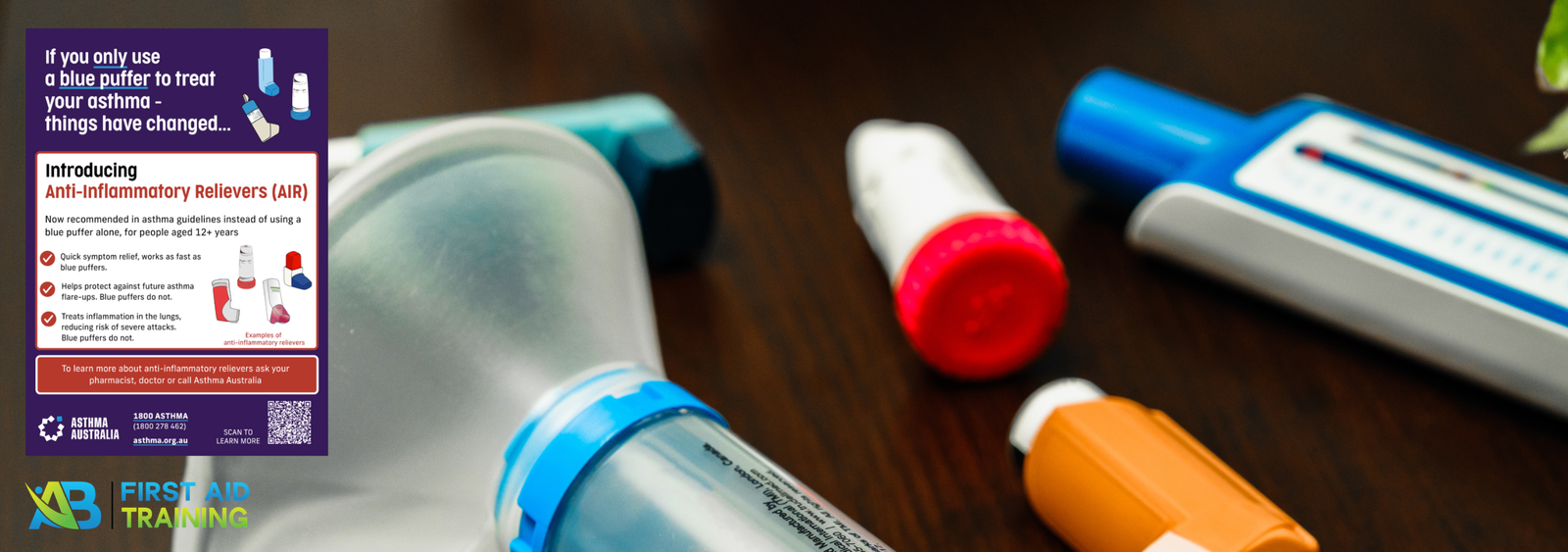
For asthma, schools must maintain an asthma management policy, hold a general-use reliever inhaler (salbutamol), ensure staff are aware of the Asthma Action Plans for students with diagnosed asthma, and have a spacer device available for use with the reliever inhaler.
Defibrillators (AEDs) in Schools
There is currently no legislative requirement for Victorian schools to hold an automated external defibrillator (AED). However, DET encourages schools to acquire and maintain one where possible, particularly given the known survival benefits when AEDs are used in conjunction with CPR within the first few minutes of a cardiac arrest.
Schools with large student populations, high-intensity physical education programmes, or community sporting events on the premises may wish to consider the case for an AED carefully. The Heart Foundation of Australia provides guidance on AED placement and maintenance.
First Aid Supplies and Accessibility
Schools are required to maintain a first aid kit that is appropriately stocked for the school’s size and context. DET provides guidance on recommended kit contents. Kits should be checked and restocked regularly, and expiry dates on medications and sterile supplies should be monitored.
Accessibility matters too: a first aid kit that is locked away or difficult to reach quickly is not fit for purpose. The intent of the legislation is that first aid can be administered promptly when a student or staff member needs it.
Record Keeping and Incident Reporting
Schools must maintain records of first aid incidents, including the nature of the incident, the first aid provided, and any follow-up actions taken. These records support school accountability and can be critical in the event of a WorkSafe investigation or legal matter.
WorkSafe Victoria’s Occupational Health and Safety Act 2004 also applies to school staff, meaning schools have obligations to manage workplace health and safety risks for employees, not just students.
Practical Steps to Stay Compliant
If your school wants to ensure it is meeting its obligations, the following are worth reviewing now:
- Audit current staff first aid qualifications and renewal dates — identify anyone who is lapsed or approaching renewal
- Confirm you have at least one qualified staff member present during all school hours, excursions, and camps
- Review your anaphylaxis and asthma policies against current Ministerial Order 706 requirements
- Check that general-use EpiPens, salbutamol, and spacers are current (not expired) and accessible
- Ensure individual student Anaphylaxis and Asthma Action Plans are up to date for the current school year
Book Training for Your School Team
If your school needs to get staff qualified or renewed in first aid, AB First Aid offers practical, engaging courses in Tullamarine that meet DET’s requirements for HLTAID011 and HLTAID009.
We also offer group bookings for school staff teams — a cost-effective way to bring multiple staff up to date at the same time.
Book your first aid training with AB First Aid and make sure your school is covered.
References
- Department of Education Victoria. (2024). First Aid Policy. https://www2.education.vic.gov.au/pal/first-aid-students-and-staff/policy
- Department of Education Victoria. (2024). Anaphylaxis Management in Schools — Ministerial Order 706. https://www2.education.vic.gov.au/pal/anaphylaxis/policy
- ASCIA. (2024). Anaphylaxis Management in Schools, Preschools and Childcare. https://www.allergy.org.au
- Asthma Australia. (2024). Managing Asthma in Schools. https://www.asthma.org.au
- WorkSafe Victoria. (2023). Occupational Health and Safety in Schools. https://www.worksafe.vic.gov.au
- Safe Work Australia. (2023). First Aid in the Workplace Code of Practice. https://www.safeworkaustralia.gov.au
Have You Read These Articals Yet?
- All Posts
- Compliance
- First Aid
Learn how NDIS support workers should respond to seizures and epileptic episodes — duty of care, safe positioning, documentation, and...
Victorian schools must comply with Ministerial Order 1160 on anaphylaxis management. Learn what DET requires for staff training, Action Plans,...

Australia now has a second PBS-listed adrenaline auto-injector. Here’s what childcare educators, school staff and parents need to know about...