
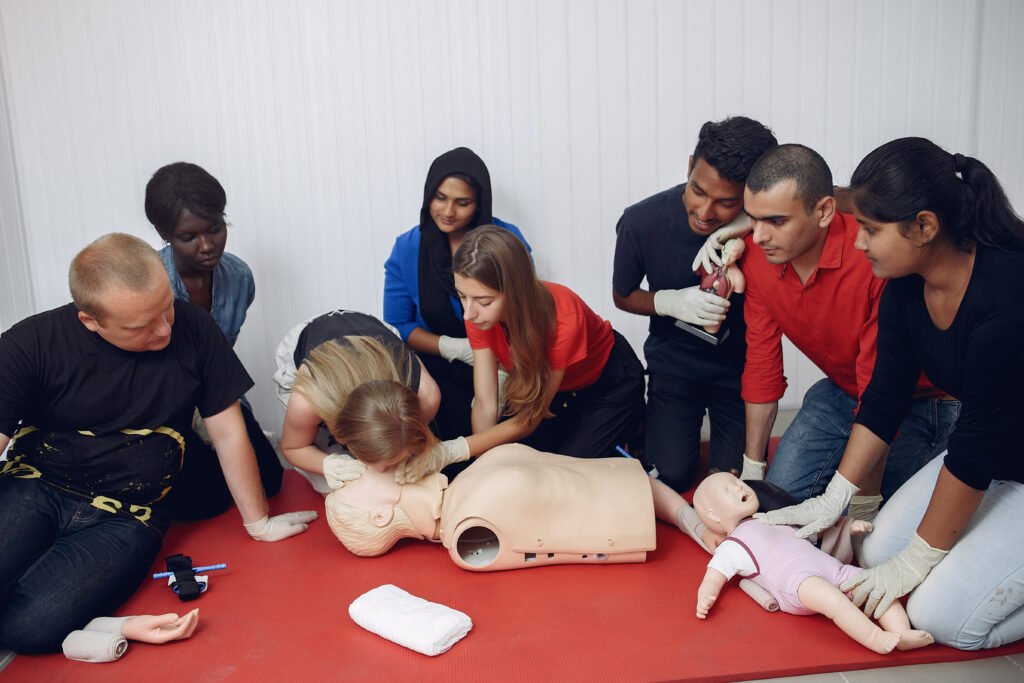
If you work as an NDIS support worker or run an NDIS registered provider organisation, first aid is not optional. It is a core requirement baked into the NDIS Practice Standards — and the NDIS Quality and Safeguards Commission expects you to have it sorted.
The challenge is that many support workers and small providers are unsure exactly what the rules require. How many staff need to be trained? What level of training counts? How often does it need to be renewed? This post breaks it down clearly, using the actual regulatory framework that applies to you.
What the NDIS Practice Standards Actually Say
The NDIS Practice Standards set out the quality standards that registered NDIS providers must meet. Under the Support Provision Environment standards, providers are required to ensure that supports are delivered in a way that is safe, promotes the wellbeing of participants, and responds to health and safety risks.
More specifically, the NDIS Commission’s expectations around emergency preparedness include having trained staff available to respond to medical emergencies. While the Practice Standards do not prescribe an exact first aid course name, the intent is clear: support workers must be capable of managing medical emergencies that arise in the course of their work.
First aid training is also directly referenced in the context of risk management. Providers are required to have documented emergency and incident management procedures, and those procedures are only meaningful if staff have the skills to carry them out.
The Safe Work Australia Framework
NDIS providers are also employers, which means they must comply with Work Health and Safety (WHS) legislation. Safe Work Australia’s First Aid in the Workplace Code of Practice applies here.
Under this code, employers must provide first aid equipment, facilities, and trained first aiders appropriate to the size and nature of their workplace. For support workers operating in community settings or in participants’ homes, the guidance is to consider the specific hazards present and ensure adequate first aid coverage is in place.
In Victoria, WorkSafe Victoria enforces the Occupational Health and Safety Act 2004 and associated regulations. WorkSafe Victoria requires that workplaces have an adequate number of first aid officers, with at least one first aider for every 25 workers in low-risk environments and one for every 10 in higher-risk settings.
Disability support work often involves physical tasks, personal care, community access, and behavioural support — all of which carry a range of health and safety risks. In practice, this means most NDIS providers should have multiple staff with current first aid qualifications.
What Level of First Aid Training Is Required?
The two most common first aid qualifications relevant to NDIS support workers are:
- HLTAID011 — Provide First Aid: The standard first aid certificate covering CPR, basic life support, and management of a wide range of injuries and medical emergencies. This is the certificate most support workers should hold.
- HLTAID009 — Provide Cardiopulmonary Resuscitation (CPR): A standalone CPR unit required to be renewed annually under the Australian Resuscitation Council (ARC) guidelines.
The ARC recommends that CPR skills be updated annually to ensure competency is maintained. The full first aid certificate (HLTAID011) should be renewed every three years. These timeframes are consistent with the expectations of the NDIS Commission and Safe Work Australia.
Some providers in higher-complexity settings — for example, those supporting participants with epilepsy, severe anaphylaxis, or complex medical needs — may also need staff trained in HLTAID012 — Provide First Aid in an Education and Care Setting or specific condition management plans developed with healthcare professionals.
Participant-Specific Health Plans and First Aid
Beyond general first aid training, the NDIS Practice Standards require providers to implement each participant’s Support Plan, which includes any health-related instructions. If a participant has a known medical condition — such as epilepsy, diabetes, or a severe allergy — support workers must understand how to respond to related emergencies as part of that individual plan.
For participants with severe allergies, the Australasian Society of Clinical Immunology and Allergy (ASCIA) provides action plans that outline exactly how to respond to an anaphylactic reaction. NDIS providers working with participants who have a known allergy should ensure staff are trained to use an adrenaline auto-injector (EpiPen) and know the steps in the ASCIA action plan.
These participant-specific requirements are in addition to general first aid obligations — not a replacement for them.
Incident Reporting and Documentation
When a first aid incident occurs during a support, NDIS providers are required to report it to the NDIS Quality and Safeguards Commission if it meets the threshold of a reportable incident. This includes serious injury to a participant, unexpected death, or any event that poses a significant risk to a participant’s health or safety.
Reporting requirements are detailed in the NDIS (Incident Management and Reportable Incidents) Rules 2018. Providers must have an internal incident management system that captures, investigates, and addresses incidents — and that system must be activated whenever first aid is required.
This means good first aid practice and good incident documentation go hand in hand. Support workers should know how to administer first aid, and they should also know how to record what happened, what they did, and when they sought further medical assistance.
Common Gaps — and Why Refreshers Matter
In compliance audits, the NDIS Commission has identified first aid as a recurring area of concern. Common issues include:
- Support workers holding expired certificates
- Providers unable to demonstrate adequate first aider coverage across their roster
- Staff who completed training years ago but have had no refresher or practice since
- First aid equipment (e.g. first aid kits, EpiPens for participant use) that is not regularly checked or restocked
Expired training is one of the easiest things to address — and one of the most common findings. A straightforward internal register tracking each worker’s certificate expiry date can prevent this becoming a compliance issue.
Practical Steps for NDIS Providers
If you are a registered NDIS provider or a support worker wanting to ensure you meet your obligations, here is what to focus on:
- Ensure all support workers hold a current HLTAID011 first aid certificate (renewed every three years)
- Ensure all staff renew their CPR (HLTAID009) annually
- Maintain a training register with expiry dates and schedule renewals in advance
- Review each participant’s support plan and identify any condition-specific first aid requirements
- Check and restock first aid kits regularly, including any participant-specific medications such as EpiPens or seizure rescue medication
- Have a documented emergency response procedure that staff are familiar with
- Ensure new staff complete first aid training before working independently with participants
Book First Aid Training for Your NDIS Team
Meeting your NDIS first aid obligations does not need to be complicated. The most important step is making sure your staff are trained, current, and confident in what to do when something goes wrong.
At AB First Aid in Tullamarine, we provide practical first aid training designed for real-world situations — including the kinds of medical emergencies that arise in disability support work. Our courses are delivered by experienced trainers who understand the sector, and we can work with your team’s scheduling to make sure everyone gets what they need.
View our upcoming course dates and book your first aid training online today. Keeping your team skilled and your organisation compliant starts with a single step.
References
- NDIS Quality and Safeguards Commission, NDIS Practice Standards and Quality Indicators, 2021. ndiscommission.gov.au
- NDIS Quality and Safeguards Commission, NDIS (Incident Management and Reportable Incidents) Rules 2018. ndiscommission.gov.au
- Safe Work Australia, First Aid in the Workplace — Code of Practice, 2021. safeworkaustralia.gov.au
- WorkSafe Victoria, First Aid in the Workplace. worksafe.vic.gov.au
- Australian Resuscitation Council, ARC Guideline 10.1 — Cardiopulmonary Resuscitation, 2021. resus.org.au
- Australasian Society of Clinical Immunology and Allergy (ASCIA), Anaphylaxis First Aid Action Plan. allergy.org.au