
The Most Common Medical Emergencies in Disability Support Work
If you work as an NDIS support worker, you already know that no two shifts look the same. You might be supporting someone with a physical disability in the morning and assisting a participant with complex medical needs in the afternoon. It’s rewarding work — but it comes with real risk. When a medical emergency happens, your ability to respond quickly and correctly can make an enormous difference.
This post covers the first aid emergencies and hazards you are most likely to encounter as a disability support worker in Australia, and what you should know about each one.
Seizures
Epilepsy and seizure disorders are among the most common neurological conditions in Australia, and they affect people with intellectual disabilities at a significantly higher rate than the general population. Research indicates that up to 30 per cent of people with an intellectual disability also have epilepsy — compared with around 1 per cent of the general population.
Many support workers will witness a seizure at some point in their career. The correct response is not to restrain the person, but to stay calm, time the seizure, clear the area of hazards, place something soft under the person’s head, and put them in the recovery position once the seizure ends. Call 000 if the seizure lasts more than five minutes, if a second seizure follows, or if the person does not regain consciousness.
You should also be familiar with the participant’s individual epilepsy management plan, which may include protocols for emergency medication. If you are administering medication as part of your role, you must be appropriately trained and authorised to do so.
Choking and Swallowing Difficulties
Dysphagia — difficulty swallowing — is common among NDIS participants with neurological conditions, cerebral palsy, acquired brain injuries, or age-related decline. This significantly increases the risk of choking during mealtimes.
Choking is a life-threatening emergency. A person who cannot cough effectively, cannot speak, or is turning blue requires immediate action. The standard response for a conscious adult who is choking is five back blows followed by five abdominal thrusts, repeated until the object is dislodged or the person becomes unconscious — at which point you begin CPR and call 000.
If you regularly support participants with dysphagia, familiarise yourself with their mealtime management plans and follow any recommendations from their speech pathologist. These plans exist to reduce the risk before a choking incident occurs.
Anaphylaxis
Severe allergic reactions, or anaphylaxis, can occur rapidly and become life-threatening within minutes. Some NDIS participants have known allergies to foods, medications, or insect stings, and may carry an adrenaline autoinjector such as an EpiPen.
Symptoms of anaphylaxis include hives, facial swelling, difficulty breathing, a drop in blood pressure, and collapse. The Australasian Society of Clinical Immunology and Allergy (ASCIA) advises that anyone experiencing anaphylaxis should receive adrenaline immediately, followed by a call to 000. Do not wait to see if symptoms improve before acting.
Knowing how to use an adrenaline autoinjector is a core first aid skill for disability support workers. If a participant has an ASCIA Action Plan for Anaphylaxis, make sure you are familiar with it before starting a shift.
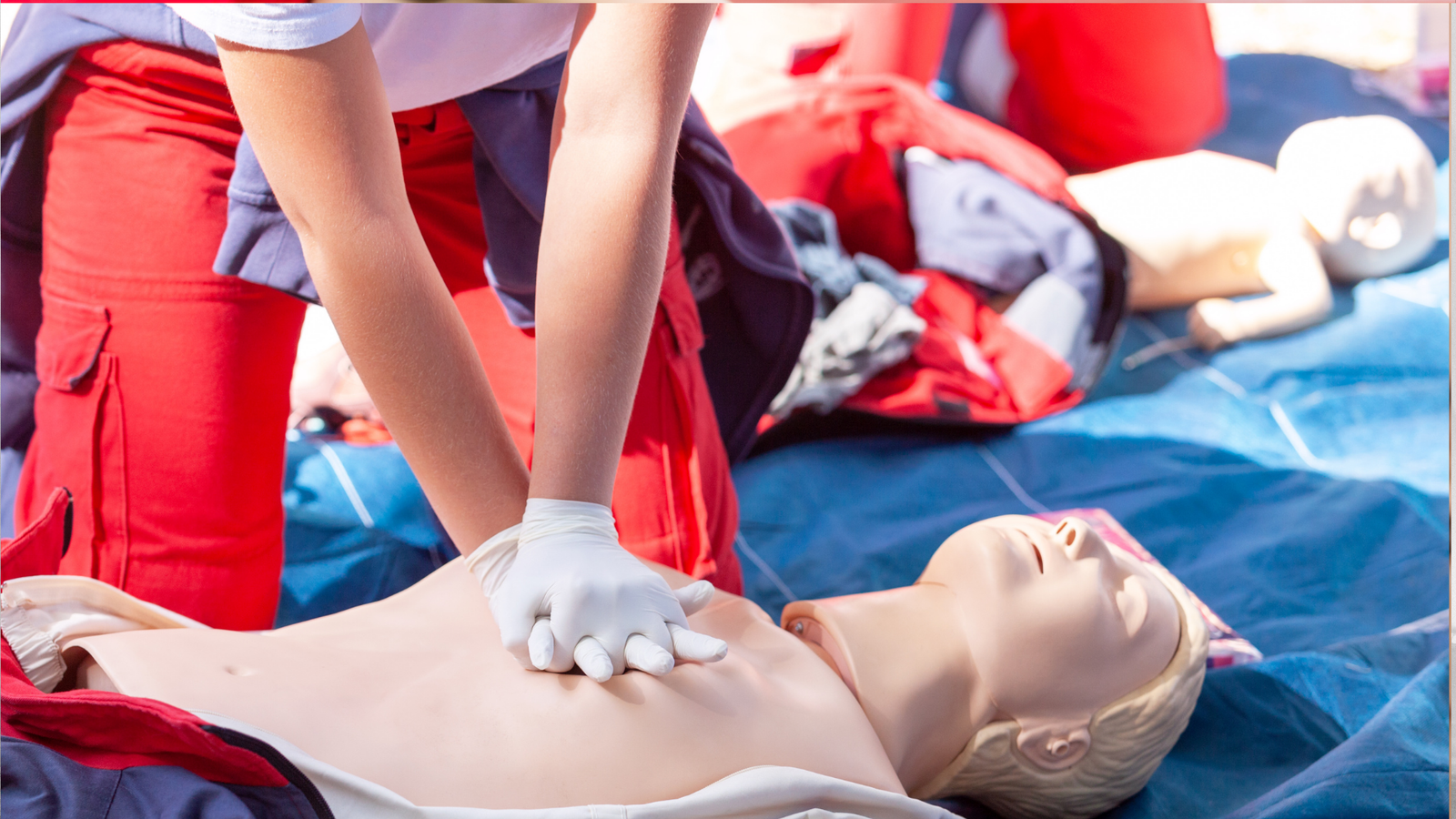
Cardiac Arrest and CPR
Cardiac arrest — where the heart stops beating effectively — requires immediate CPR and, if available, the use of an automated external defibrillator (AED). Without intervention, survival rates drop by approximately 10 per cent for every minute that passes without CPR.
NDIS participants with complex health needs, obesity, or cardiovascular conditions may be at higher risk of cardiac events. Support workers who are trained in CPR and can operate an AED give participants the best possible chance of survival before emergency services arrive.
The Australian Resuscitation Council (ARC) recommends that workers in health and community services roles hold current CPR certification, renewed annually. If your certificate is more than a year old, it is time to update it.
Falls and Manual Handling Injuries
Falls are one of the leading causes of injury among people with disability. Participants with mobility limitations, poor balance, or low bone density face elevated risk — and so do the support workers who assist them. Manual handling injuries, including back strains from lifting, transferring, or repositioning participants, are a significant occupational hazard in the disability sector.
WorkSafe Victoria reports that musculoskeletal disorders are among the most common causes of workers’s compensation claims in the health and community services sector in Victoria. Knowing how to assess a fall, apply basic wound care, recognise signs of a fracture or head injury, and keep a participant safe while waiting for additional help are all practical skills that first aid training builds.
Mental Health Crises
Many NDIS participants live with mental health conditions including anxiety, depression, psychosis, or post-traumatic stress. Some participants may experience acute mental health crises — including self-harm or suicidal distress — during a support worker’s shift.
While standard first aid training does not cover clinical mental health intervention, a trained worker is better equipped to respond calmly, prioritise safety, and know when and how to call for additional help. Some disability support organisations also require workers to complete Mental Health First Aid (MHFA) training alongside a standard first aid certificate — a combination that gives workers more confidence in complex situations.
Respiratory Emergencies Including Asthma
Asthma and other respiratory conditions are more prevalent among people with disability than in the general population. It is essential that support workers understand each participant’s current asthma action plan rather than assuming the protocol, particularly given that Australia’s asthma management guidelines have recently been updated.
For any participant experiencing severe breathing difficulty, a tight chest, or an inability to complete sentences, the priority is to sit them upright, follow their written asthma action plan, administer their reliever inhaler as directed, and call 000 if there is no improvement after four puffs or if symptoms are rapidly worsening.
What This Means for Your Training
The NDIS Quality and Safeguards Commission’s Practice Standards make clear that registered NDIS providers must ensure workers have the skills and knowledge to support participants safely — and that includes being prepared for health emergencies. The expectation is not just that training has occurred, but that it is current and that workers can apply it confidently in a real situation.
First aid training that is specific, up to date, and regularly renewed is not an optional extra in disability support work. It is part of what it means to provide quality, safe care.
If your first aid certificate is due for renewal, or if your organisation has team members who are yet to complete their training, book your first aid training with AB First Aid in Tullamarine. We deliver practical, engaging courses suited to workers across the health and community services sector. View our public course schedule and reserve your place today.
References
- NDIS Quality and Safeguards Commission. (2021). NDIS Practice Standards and Quality Indicators. ndiscommission.gov.au
- Epilepsy Foundation Australia. (2023). Epilepsy and intellectual disability. epilepsyfoundation.org.au
- ASCIA — Australasian Society of Clinical Immunology and Allergy. (2023). Anaphylaxis resources and action plans. allergy.org.au
- Australian Resuscitation Council (ARC). (2023). Guideline 8: Cardiopulmonary resuscitation. resus.org.au
- Safe Work Australia. (2023). Work-related injury statistics: Health care and social assistance. safeworkaustralia.gov.au
- WorkSafe Victoria. (2024). Musculoskeletal disorders in community services. worksafe.vic.gov.au
- Speech Pathology Australia. (2022). Dysphagia resources. speechpathologyaustralia.org.au
- Asthma Australia. (2024). Asthma action plans. asthma.org.au
Book A Course
Recent Blogs
- All Posts
- Compliance
- First Aid

Australia’s asthma guidelines have changed. Learn what AIR therapy means and why blue puffers alone are no longer recommended for...

Australia’s asthma guidelines have changed. Learn what AIR therapy means and why blue puffers alone are no longer recommended for...

Australia’s asthma guidelines have changed. Learn what AIR therapy means and why blue puffers alone are no longer recommended for...
AB First Aid Training & Compliance
The Most Common Medical Emergencies in Disability Support Work
If you work as an NDIS support worker, you already know that no two shifts look the same. You might be supporting someone with a physical disability in the morning and assisting a participant with complex medical needs in the afternoon. It’s rewarding work — but it comes with real risk. When a medical emergency happens, your ability to respond quickly and correctly can make an enormous difference.
This post covers the first aid emergencies and hazards you are most likely to encounter as a disability support worker in Australia, and what you should know about each one.
Seizures
Epilepsy and seizure disorders are among the most common neurological conditions in Australia, and they affect people with intellectual disabilities at a significantly higher rate than the general population. Research indicates that up to 30 per cent of people with an intellectual disability also have epilepsy — compared with around 1 per cent of the general population.
Many support workers will witness a seizure at some point in their career. The correct response is not to restrain the person, but to stay calm, time the seizure, clear the area of hazards, place something soft under the person’s head, and put them in the recovery position once the seizure ends. Call 000 if the seizure lasts more than five minutes, if a second seizure follows, or if the person does not regain consciousness.
You should also be familiar with the participant’s individual epilepsy management plan, which may include protocols for emergency medication. If you are administering medication as part of your role, you must be appropriately trained and authorised to do so.
Choking and Swallowing Difficulties
Dysphagia — difficulty swallowing — is common among NDIS participants with neurological conditions, cerebral palsy, acquired brain injuries, or age-related decline. This significantly increases the risk of choking during mealtimes.
Choking is a life-threatening emergency. A person who cannot cough effectively, cannot speak, or is turning blue requires immediate action. The standard response for a conscious adult who is choking is five back blows followed by five abdominal thrusts, repeated until the object is dislodged or the person becomes unconscious — at which point you begin CPR and call 000.
If you regularly support participants with dysphagia, familiarise yourself with their mealtime management plans and follow any recommendations from their speech pathologist. These plans exist to reduce the risk before a choking incident occurs.
Anaphylaxis
Severe allergic reactions, or anaphylaxis, can occur rapidly and become life-threatening within minutes. Some NDIS participants have known allergies to foods, medications, or insect stings, and may carry an adrenaline autoinjector such as an EpiPen.
Symptoms of anaphylaxis include hives, facial swelling, difficulty breathing, a drop in blood pressure, and collapse. The Australasian Society of Clinical Immunology and Allergy (ASCIA) advises that anyone experiencing anaphylaxis should receive adrenaline immediately, followed by a call to 000. Do not wait to see if symptoms improve before acting.
Knowing how to use an adrenaline autoinjector is a core first aid skill for disability support workers. If a participant has an ASCIA Action Plan for Anaphylaxis, make sure you are familiar with it before starting a shift.
Cardiac Arrest and CPR
Cardiac arrest — where the heart stops beating effectively — requires immediate CPR and, if available, the use of an automated external defibrillator (AED). Without intervention, survival rates drop by approximately 10 per cent for every minute that passes without CPR.
NDIS participants with complex health needs, obesity, or cardiovascular conditions may be at higher risk of cardiac events. Support workers who are trained in CPR and can operate an AED give participants the best possible chance of survival before emergency services arrive.
The Australian Resuscitation Council (ARC) recommends that workers in health and community services roles hold current CPR certification, renewed annually. If your certificate is more than a year old, it is time to update it.
Falls and Manual Handling Injuries
Falls are one of the leading causes of injury among people with disability. Participants with mobility limitations, poor balance, or low bone density face elevated risk — and so do the support workers who assist them. Manual handling injuries, including back strains from lifting, transferring, or repositioning participants, are a significant occupational hazard in the disability sector.
WorkSafe Victoria reports that musculoskeletal disorders are among the most common causes of workers’s compensation claims in the health and community services sector in Victoria. Knowing how to assess a fall, apply basic wound care, recognise signs of a fracture or head injury, and keep a participant safe while waiting for additional help are all practical skills that first aid training builds.
Mental Health Crises
Many NDIS participants live with mental health conditions including anxiety, depression, psychosis, or post-traumatic stress. Some participants may experience acute mental health crises — including self-harm or suicidal distress — during a support worker’s shift.
While standard first aid training does not cover clinical mental health intervention, a trained worker is better equipped to respond calmly, prioritise safety, and know when and how to call for additional help. Some disability support organisations also require workers to complete Mental Health First Aid (MHFA) training alongside a standard first aid certificate — a combination that gives workers more confidence in complex situations.
Respiratory Emergencies Including Asthma
Asthma and other respiratory conditions are more prevalent among people with disability than in the general population. It is essential that support workers understand each participant’s current asthma action plan rather than assuming the protocol, particularly given that Australia’s asthma management guidelines have recently been updated.
For any participant experiencing severe breathing difficulty, a tight chest, or an inability to complete sentences, the priority is to sit them upright, follow their written asthma action plan, administer their reliever inhaler as directed, and call 000 if there is no improvement after four puffs or if symptoms are rapidly worsening.
What This Means for Your Training
The NDIS Quality and Safeguards Commission’s Practice Standards make clear that registered NDIS providers must ensure workers have the skills and knowledge to support participants safely — and that includes being prepared for health emergencies. The expectation is not just that training has occurred, but that it is current and that workers can apply it confidently in a real situation.
First aid training that is specific, up to date, and regularly renewed is not an optional extra in disability support work. It is part of what it means to provide quality, safe care.
If your first aid certificate is due for renewal, or if your organisation has team members who are yet to complete their training, book your first aid training with AB First Aid in Tullamarine. We deliver practical, engaging courses suited to workers across the health and community services sector. View our public course schedule and reserve your place today.
References
- NDIS Quality and Safeguards Commission. (2021). NDIS Practice Standards and Quality Indicators. ndiscommission.gov.au
- Epilepsy Foundation Australia. (2023). Epilepsy and intellectual disability. epilepsyfoundation.org.au
- ASCIA — Australasian Society of Clinical Immunology and Allergy. (2023). Anaphylaxis resources and action plans. allergy.org.au
- Australian Resuscitation Council (ARC). (2023). Guideline 8: Cardiopulmonary resuscitation. resus.org.au
- Safe Work Australia. (2023). Work-related injury statistics: Health care and social assistance. safeworkaustralia.gov.au
- WorkSafe Victoria. (2024). Musculoskeletal disorders in community services. worksafe.vic.gov.au
- Speech Pathology Australia. (2022). Dysphagia resources. speechpathologyaustralia.org.au
- Asthma Australia. (2024). Asthma action plans. asthma.org.au
Have You Read These Articals Yet?
- All Posts
- Compliance
- First Aid

Australia’s asthma guidelines have changed. Learn what AIR therapy means and why blue puffers alone are no longer recommended for...

Australia’s asthma guidelines have changed. Learn what AIR therapy means and why blue puffers alone are no longer recommended for...

Australia’s asthma guidelines have changed. Learn what AIR therapy means and why blue puffers alone are no longer recommended for...