Managing Choking in Infants and Young Children: A Step-by-Step First Aid Guide for Childcare Workers
Choking is one of the most frightening emergencies that can happen in a childcare setting and one of the most time-critical. Young children, especially those under five, are at significantly higher risk of choking than older children or adults. Their airways are smaller, they explore the world with their mouths, and they often eat while moving or distracted.
For childcare workers across Victoria, knowing how to recognise and respond to a choking emergency quickly and correctly is not just good practice. It is a professional and legal responsibility. This guide walks through what choking looks like, how to respond based on the age of the child, and what every childcare worker needs to know before they ever need to use this skill in real life.
Why Choking Is a High-Risk Emergency in Childcare
Children between 12 months and four years of age are most commonly affected by choking incidents. According to the Royal Children’s Hospital Melbourne, choking is a leading cause of injury-related deaths in children under five in Australia. Common causes include food (grapes, chunks of meat, raw carrot, whole nuts), small toy parts, coins, and other objects within easy reach in a childcare environment.
The speed with which a choking incident can become life-threatening means that childcare staff need to respond immediately. There is no time to search for a manual or wait for someone else to act. Effective first aid begins with recognition.
Recognising a Choking Child
A child with a partial airway obstruction may still be able to cough, cry, or breathe noisily. In this case, the most important thing is to encourage them to cough. A strong cough is the most effective way to dislodge an object from the airway. Stay close, reassure the child, and do not interfere unless the situation changes.
A complete or severe obstruction looks very different:
- The child cannot cough effectively or produces only a weak, ineffective cough
- They may be unable to cry or speak
- Their skin may become blue or grey around the lips (cyanosis)
- They may clutch their throat, appear distressed, or become limp
- Breathing may be absent or severely laboured
If a child is showing signs of a severe or complete airway obstruction, act immediately. Call for help or have someone else call 000 while you begin first aid.
First Aid for a Choking Child Aged One Year and Over
The Australian Resuscitation Council (ARC) guidelines are the standard used across Australia for managing choking in children. For a child aged one year and over who is conscious and showing signs of severe airway obstruction:
- Encourage coughing first. If the child can cough forcefully, do not intervene physically yet. Encourage them to keep coughing.
- Give up to 5 back blows. Position the child leaning forward if possible. Using the heel of your hand, deliver up to 5 firm blows between the shoulder blades.
- Check the mouth. After each back blow, look in the mouth. If you can see the object clearly, remove it. Do not perform blind finger sweeps.
- Give up to 5 chest thrusts. Stand or kneel behind the child. Place two fingers on the lower half of the sternum (breastbone) and deliver up to 5 firm, downward chest thrusts.
- Alternate and repeat. Continue alternating between 5 back blows and 5 chest thrusts, checking the mouth after each cycle, until the object is dislodged or emergency services arrive.
If the child becomes unconscious, lower them carefully to the ground, call 000 immediately if not already done, and begin CPR. When opening the airway to give breaths, look in the mouth and only remove an object if it is clearly visible.
First Aid for a Choking Infant Under 12 Months
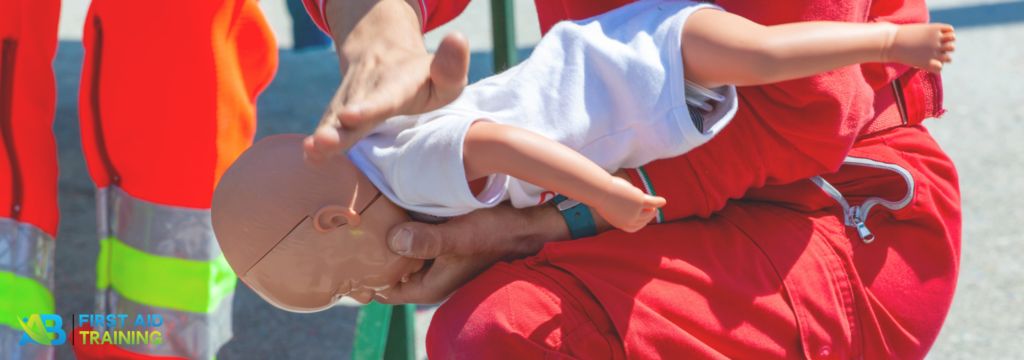
The technique for infants is different because of their smaller size and more fragile bodies. For a conscious infant showing signs of choking:
- Hold face down along your forearm. Support the infant’s head, keeping it lower than the chest.
- Give up to 5 back blows. Use the heel of your hand to deliver up to 5 firm blows between the shoulder blades.
- Turn face up and check the mouth. Turn the infant face up, still supporting the head. Look in the mouth and remove any visible object with a pinky finger.
- Give up to 5 chest thrusts. Using two fingers placed on the lower half of the sternum, deliver 5 downward chest thrusts. Abdominal thrusts are not recommended for infants.
- Repeat the cycle. Continue alternating back blows and chest thrusts until the object clears or the infant becomes unresponsive.
If the infant becomes unconscious, start infant CPR immediately and call 000.
Note: Abdominal thrusts (the Heimlich manoeuvre) are not recommended for infants under 12 months in ARC guidelines, as they can cause serious injury to internal organs.
What Not to Do in a Choking Emergency
In a high-stress situation, it is easy to default to instinct. But some common instincts can make things worse. Avoid:
- Performing blind finger sweeps in the mouth, as this can push the object further in
- Holding the child upside down and shaking them
- Giving abdominal thrusts to an infant under 12 months
- Leaving the child alone, even briefly, to go for help. Call out for assistance while staying with the child.
After the Emergency: Documentation and Follow-Up
Even if a choking incident resolves quickly and the child appears fine, it must be documented and parents or guardians must be notified promptly. Under the Education and Care Services National Regulations, services have obligations around incident reporting, and children who have experienced choking should be assessed by a medical professional to confirm no internal injury or remaining obstruction.
WorkSafe Victoria and ACECQA both emphasise that all incidents in early childhood settings, including near-misses, should be recorded in a written incident log and reviewed for preventative action.
Prevention in the Childcare Environment
First aid knowledge is your response plan. Prevention is the first layer of protection. Practical measures for childcare services include:
- Ensuring food is cut into appropriately small, age-suitable pieces
- Avoiding high-risk foods for children under three, including whole grapes, raw carrot sticks, whole nuts, and hard lollies
- Ensuring children sit down while eating and are supervised at all times during mealtimes
- Conducting regular environment checks for small objects within reach of young children
- Having all staff trained in current first aid, including CPR, relevant to the age groups in care
First Aid Training for Childcare Workers in Victoria
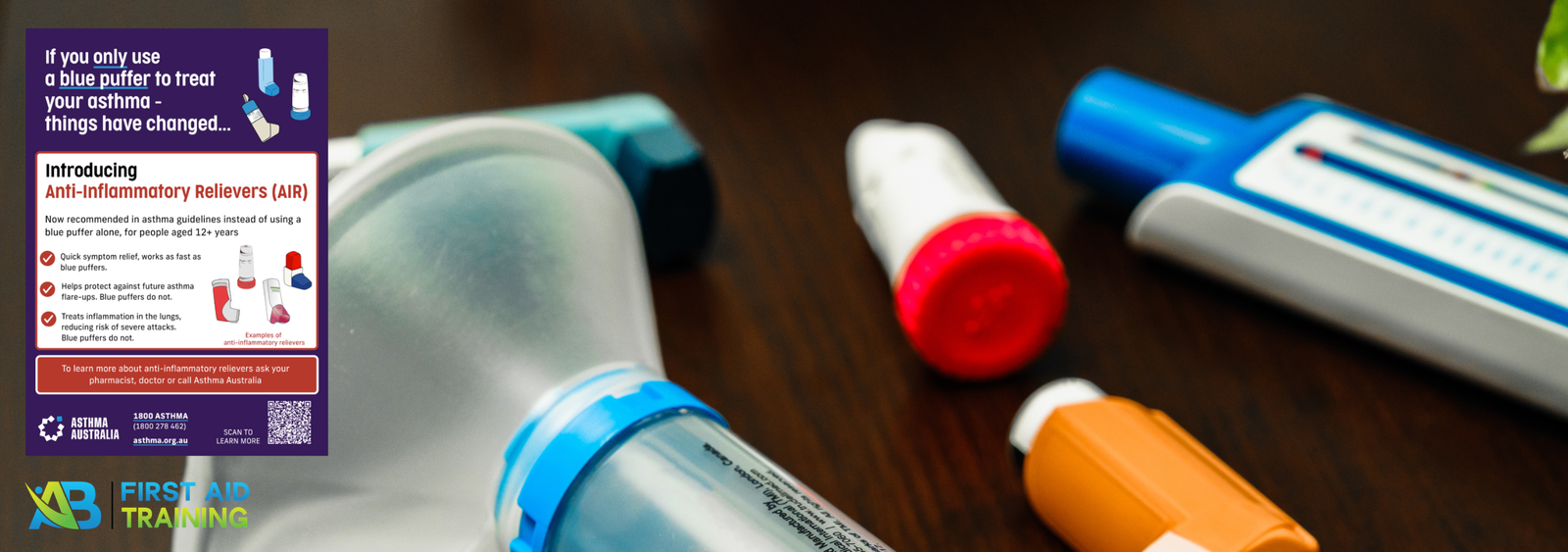
Under ACECQA requirements and the National Quality Framework, all early childhood education and care services in Victoria must ensure that first aid trained staff are present at all times. Approved first aid qualifications must include CPR, asthma and anaphylaxis training, and be renewed according to ARC and regulatory guidelines.
Knowing what to do in a choking emergency is one of those skills you hope you never need. But when you do, there is no time to learn it on the spot. Hands-on, practical training makes the difference between hesitation and confident, effective action.
If you are a childcare worker or service director looking to ensure your team has the skills they need, book your first aid training with AB First Aid in Tullamarine. We offer flexible, engaging courses designed specifically for the demands of working with young children, practical, up-to-date, and tailored to Victorian regulatory requirements.
References
- Australian Resuscitation Council (ARC). (2021). Guideline 2.6: Airway obstruction. Retrieved from resus.org.au
- Royal Children’s Hospital Melbourne. (2023). Choking: First aid. Clinical Practice Guidelines. Retrieved from rch.org.au
- ACECQA. (2024). First aid requirements. National Quality Framework. Retrieved from acecqa.gov.au
- Education and Care Services National Regulations 2011 (Vic). Regulations 85, 87, 89.
- WorkSafe Victoria. (2023). Occupational health and safety in early childhood services. Retrieved from worksafe.vic.gov.au